

Your heating bill keeps climbing. You have already tried the obvious fixes. Lower the thermostat, install bulbs, maybe add a draft stopper by the back door. None of these moves changed the number much. Now you are looking at the idea of paying someone to walk through your house and tell you what is wrong with it. Is a home energy audit worth it? Is this just another expense dressed up as a solution?
The honest answer depends on what shape your house’s in and how much the audit actually costs you. Here is what a home energy audit involves, what it costs in New York and Pennsylvania and how to tell if the math works in your favor.
TL;DR
A home energy audit normally costs between $200 and $600 across the country. A federal tax credit can cover up to $150 of that cost.
In New York through NYSERDA and in Pennsylvania through PECO and PPL under Act 129 heavily discounted home energy audits are available usually based on income.
A full professional home energy audit contains a blower door test and an infrared inspection. It usually takes two to four hours for most homes.
The savings that a home energy audit often finds range from $500 to $2,000 per year. For drafty homes the audit can pay for itself within a year.
Newer or renovated homes may gain less from a full paid home energy audit. In those cases starting with a DIY assessment is a good idea.
A home energy audit shows how efficiently your home uses energy. It does not alter your supply rate, which’s a separate part of your bill.
What a Home Energy Audit Actually Involves?
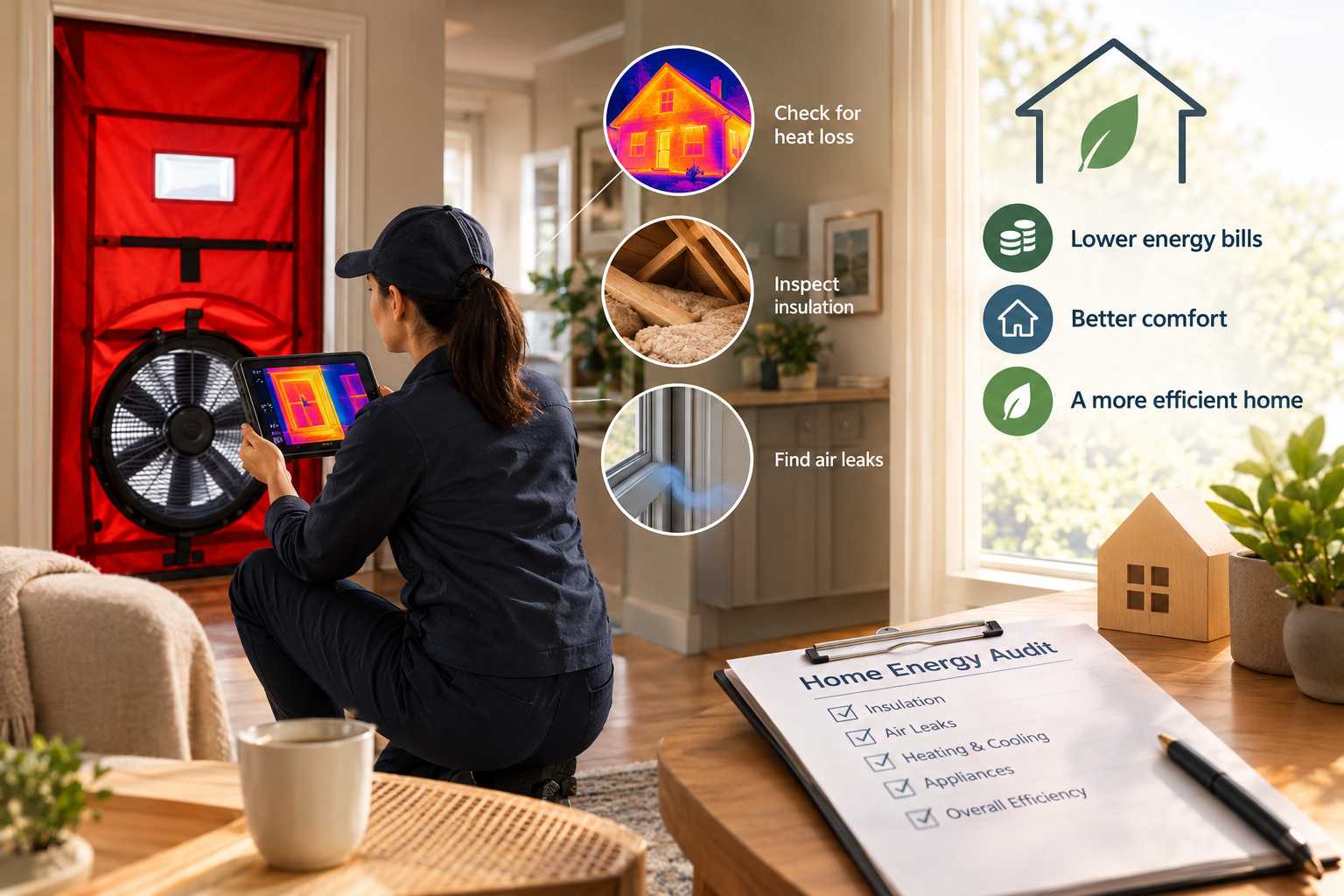
A home energy audit called a home energy assessment is a structured inspection of how your house uses and loses energy. A trained professional walks through your home and reviews a year of utility bills. Runs a handful of diagnostic tests that most homeowners cannot do themselves.
The centerpiece of professional audits is a blower door test. A large fan temporarily depressurizes your home, which makes air leaks easy to find and measure. Many auditors also use cameras to spot where insulation is thin or missing something that is invisible to the eye but shows up clearly as a temperature difference on camera. A full audit usually takes two to four hours depending on the size of the house. You walk away with a written report ranking which fixes matters most.
This is different from a walk-through where someone hands you a few LED bulbs and calls it done. That has value too. It is not the same depth as a full home energy audit with blower door and infrared testing.
Home Energy Audit Cost: What You’ll Actually Pay?
Nationally a professional home energy audit costs between $200 and $600 depending on your home’s size and how thorough the audit is. A basic visual and blower door audit sits toward the end. A comprehensive audit with diagnostic testing runs closer to the top.
There is also a tax credit that softens the number. The Energy Efficient Home Improvement Credit covers thirty percent of the audit cost capped at $150, which knocks a chunk off the final bill if you qualify.
The national average is not the number that matters most if you live in New York or Pennsylvania because both states have utility-sponsored programs that change the actual cost of a home energy audit significantly.
Free and Discounted Home Energy Audits in NY and PA.
In New York NYSERDA runs home energy assessment programs that are free or heavily discounted depending on household income through its EmPower+ and Home Performance with ENERGY STAR programs. A certified contractor visits your home, evaluates heating, electricity use and insulation and identifies upgrades that’re eligible for additional incentives.
In Pennsylvania PECO and PPL both run audit programs required under the state’s Act 129 energy efficiency law. PECO offers in-home energy assessments directly through its website and income-qualified customers can access versions of the program with free audits included. PPL offers a home energy checkup that can surface rebate opportunities beyond what a standard home energy audit covers.
Before paying a private contractor for a home energy audit it is worth calling your utility first. Many homeowners in markets like NY and PA do not realize these programs exist and end up paying full price for something that their utility would have subsidized.
What You Get Back: Savings vs. The Cost of a Home Energy Audit?
A reasonable estimate puts savings opportunities identified by a home energy audit somewhere in the range of five hundred dollars to two thousand dollars a year though the actual number depends heavily on your home’s age, size and current condition. A drafty older house with no insulation has far more room for savings than a newer well-sealed one.
That means a three hundred to five hundred dollar audit can pay for itself within a year for homes with real inefficiencies to find. For a built or recently renovated home the payback period stretches longer and the audit may mostly confirm you are already doing fine rather than uncover major savings.
The report itself matters too. You do not have to act on every recommendation at once. A good home energy audit ranks fixes by cost and impact so you can tackle the highest-return items first like air sealing before committing to bigger projects, like insulation upgrades or a furnace replacement.
When a Home Energy Audit Is Worth It? (And When It Might Not Be)
A situation where a home energy audit is clearly worth the cost:
Your home is older than 20 years and has not had insulation or air sealing work done.
Your energy bills seem high for the size of your home. You cannot explain why.
You are planning a renovation and want to spend money wisely.
You qualify for a free or heavily discounted home energy audit through NYSERDA, PECO or PPL.
Situations where a home energy audit’s less likely to pay off right away:
You have already had recent insulation, window or HVAC upgrades.
Your home is a construction built to current energy codes.
You are only looking to make one or two small changes, where a free utility walk‑through covers enough.
DIY Energy Assessment vs. Professional Home Energy Audits.
If a full professional home energy audit feels like much for you at this moment a basic DIY energy assessment can be a good first step.
Walk through your home one room at a time. Look for drafts near doors and windows. Check how deep the insulation is in your attic. Look over a year’s worth of utility bills to spot any spikes.
A DIY check will not find the things that a blower door test or infrared camera would. However it can show whether a professional home energy audit is likely to be worth the time and money. If you already practice some free habits, the guide on cutting your electricity bill with smart habits offers simple changes that can begin without a home energy audit.
Making the Most of Your Home Energy Audit Results.
When the home energy audit report arrives the easiest wins are usually air sealing and attic insulation. These are relatively inexpensive compared to the savings they bring. Larger suggestions, such as replacing a furnace or windows take longer to pay back. They matter more over the life of the home.
What a home energy audit will not change is your supply rate, the price you pay per kilowatt‑hour or therm for the energy itself. That part of your bill is controlled by your supplier, not by how efficient your home’s. If you have not checked your supply rate recently the benefits of switching page explains what a fixed rate plan does. Does not affect. You can also see how CPG’s plans are structured on the Why CPG page.
Curious what a stable supply rate could do for your bill along with your efficiency upgrades? Browse CPG’s energy. Compare fixed rate options for your home.
FAQs
Q : If my utility offers a free audit, is it as thorough as a paid one from a private contractor?
A : Often yes for the diagnostic part. NYSERDA and PECO contractors are typically BPI-certified and run the same blower door and insulation checks a paid auditor would. The difference tends to be scope:
- Free programs may skip certain diagnostics for non-qualifying heating types
- Paid audits more often include full infrared scanning as standard, not optional
Q : Can I get a home energy audit if I rent instead of own?
A : Usually yes, but you’ll need your landlord’s permission for a professional to access attics, basements, or crawl spaces. Utility-sponsored programs like NYSERDA’s still accept renter applications. The bigger issue is that renters often can’t act on bigger recommendations like insulation, so a DIY check may be more practical.
Q : Does getting a home energy audit affect my home’s resale value?
A : Not directly, but the report can help at sale time. A documented audit showing recent insulation or air sealing work gives buyers concrete proof of efficiency, rather than a vague listing claim. Some buyers specifically request a Home Energy Score or audit history during inspection negotiations, so keep the report on file.
Q : How long after an audit should I expect to see lower bills?
A : That depends on which recommendations you act on, not when the audit happens. Air sealing and attic insulation typically show up on your next full billing cycle. Bigger projects, like replacing a furnace, take longer to install and may not reflect until the following season’s bills.
Q : Will an energy audit catch things like gas leaks or carbon monoxide risks, or is it only about efficiency costs?
A : Most comprehensive audits include a basic safety check alongside the efficiency testing, specifically combustion appliance safety and carbon monoxide readings near furnaces and water heaters. This isn’t the audit’s main purpose, but auditors are trained to flag it:
- Basic audits may skip this depending on the program
- Always confirm safety testing is included before scheduling
Q : If I already got an audit years ago, is it worth getting another one?
A : It depends on what’s changed. If you’ve since added insulation, replaced windows, or done other upgrades, a new audit can confirm those changes worked and surface what’s left. If nothing’s changed since your last audit, the original report’s recommendations are probably still accurate.
Q : What happens if the audit finds more problems than I can afford to fix right now?
A : Nothing happens immediately, and you’re not obligated to act on the full list at once. The report ranks fixes by cost and impact specifically so you can start with the cheapest, highest-return items, like air sealing, and schedule larger projects for when budget allows.


