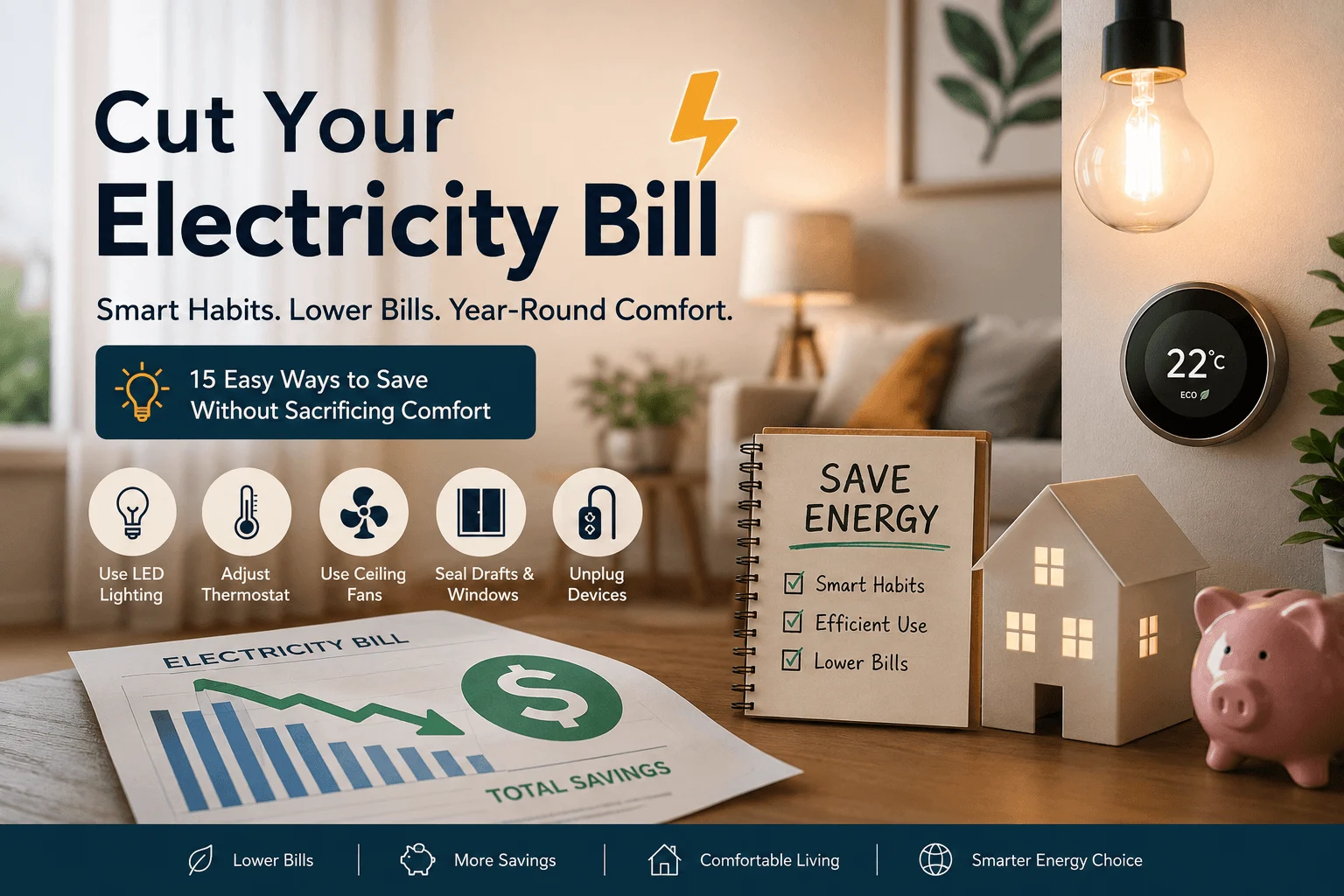
Watch your electricity bill long enough and you’ll notice a pattern: it climbs every summer when the AC won’t quit, then climbs again come winter when the furnace takes over. Plenty of folks across New York and Pennsylvania know this cycle well. And most of them assume the only fix is gritting their teeth and paying up, or sitting in a cold, dark house to prove a point.
Neither is true. A handful of small shifts with some simple tips and you’ll wonder why you never bothered before
TL;DR
- Ditch the Free-Drain Habits: Small routines like turning off lights, unplugging “phantom load” electronics, washing clothes in cold water, and running full laundry/dishwasher loads add up fast for zero cost.
- Optimize Your Appliances: Swap to LED bulbs, enable power-saving modes on tech, and keep your fridge coils clean and door seals tight so your equipment isn’t working overtime.
- Tackle Heating & Cooling Spikes: Lower your bill during seasonal peaks by adjusting your thermostat a few degrees, using ceiling fans, replacing HVAC filters, and sealing window/door drafts.
- Eliminate Hidden Energy Waste: Use smart power strips, leverage natural daylight, and switch to smaller cooking appliances (microwaves, air fryers) instead of firing up the main oven.
- Shop Your Energy Plan: Residents in NY & PA aren’t stuck with default rates, taking advantage of deregulated energy markets to compare plans can trim costs just as much as daily habits.
Habits cost nothing and add up fast
Start here, because this stuff is free.
- Flip lights off when you leave a room. Yes, you’ve heard it a thousand times. It still works, and a lot of people still don’t do it. There’s an old myth floating around that switching lights on and off burns more power than leaving them on, that’s simply WRONG!!!, at least with modern bulbs. Off is off, and off saves money.
- Unplug what you’re not using. Your phone charger, the game console, the TV a surprising number of devices sip electricity even while “off,” just sitting there in standby. Pull the plug and that drain stops.
- Wash clothes cold. Most loads don’t need hot water to come clean, and skipping the heat cuts your energy use every single time you run the machine.
- Only run the dishwasher and washer when they’re full. Half-loads waste cycles, and cycles cost money.
Appliances that work with you instead of against you
Sometimes the culprit isn’t a habit, it’s the equipment itself.
- LED bulbs use a fraction of the power that older bulbs do, and they outlast them by years, so the swap pays for itself quickly.
- Turn on power-saving modes. Laptops, TVs, gaming systems nearly all of them have a setting that trims unnecessary power draw, and most people never touch it.
- Give your fridge a little attention. Check that the door seal is tight, don’t leave the door hanging open while you decide what to eat, and wipe down the coils now and then. A fridge working harder than it needs to is quietly costing you.
None of these changes will feel dramatic on their own. Together, though, they show up on the bill.
Heating and cooling: where the real money goes
If your bill spikes hard in July or January, this is why. Heating and cooling eat up more electricity than almost anything else in the house, especially with New York winters and Pennsylvania’s sticky summers doing their thing.
- Nudge the thermostat a few degrees in either direction. It’s a small adjustment your body barely notices, but your system notices the workload difference.
- Let ceiling fans help. Moving air feels cooler than still air, so a fan running alongside your AC means you can bump the thermostat up without losing comfort.
- Swap or clean your HVAC filters. A clogged filter forces the whole system to strain, using more energy just to keep up.
- Seal up drafts around windows and doors. Every gap where outside air sneaks in is a gap your heating or cooling system has to fight against, nonstop.
Stop paying for electricity you’re not even using
A lot of waste isn’t about overuse, it’s about power leaking out in ways you never see.
- Smart power strips cut electricity to devices sitting idle, so you’re not feeding “phantom draw” all day and night.
- Open the curtains. Daylight is free lighting, and skipping the lamps during daytime hours is one of the easiest wins on this whole list.
- Cook smaller and smarter. A microwave, air fryer, or slow cooker uses far less power than firing up a full oven for a meal that doesn’t need one.
Know where your power actually goes
Most people guess wrong about what’s driving their bill. It’s rarely the obvious stuff like lights. It’s usually the fridge running around the clock, the water heater working overtime, or an old dryer pulling way more than it should. If you’ve never actually looked at which appliances use the most electricity in a typical home, it’s worth five minutes, because it changes where you focus your effort. There’s no point obsessing over phone chargers if your water heater is quietly eating 20% of your bill.
If you want a more complete picture than a guess, a home energy audit walks through your whole house room by room and flags exactly where energy is leaking out, whether that’s insulation, an aging appliance, or a system running harder than it needs to. And if you’re the type who likes numbers over vibes, this breakdown of the top ways people waste energy without realizing it covers the patterns that show up in almost every household, including a few that might surprise you.
A quick gut-check
- Before you call it a night, run through this: Lights off in empty rooms? Chargers unplugged? Is the thermostat set sensibly? Filter checked recently? Electronics in power-saving mode?
You won’t hit every item every day. Even catching a couple of them consistently makes a dent over time.
The takeaway
Habits and appliances matter, but there’s one more piece worth checking: your actual electricity plan. New York and Pennsylvania both have deregulated energy markets, which means you’re not stuck with whatever rate you started with. It’s worth comparing your options every so often, the plan sitting behind your usage can matter just as much as the usage itself.
If you’re curious what else is out there, City Power & Gas offers straightforward plans built around giving customers more say over what they pay, and our site has resources that walk through how deregulated markets actually work.
Nobody drops their electricity bill with one big move. It happens through a stack of smaller ones a few degrees here, a sealed draft there, lights off when nobody’s in the room. None of it demands sacrifice. It just asks for a little consistency, and the savings follow on their own.
FAQ’s
1. How much electricity does the average home use?
The amount of electricity a home uses depends on its size, location, number of occupants, and appliances.
- U.S. homes typically use the most electricity for heating, cooling, water heating, and major appliances.
- Seasonal weather can cause usage to rise significantly.
- Homes with electric heating or cooling generally use more electricity than homes that rely on other energy sources for those needs.
Looking at your monthly kWh usage rather than only the dollar amount on your bill can help you understand whether your electricity consumption has actually increased.
2. Why does my electricity bill increase in the summer?
Summer electricity bills often rise because air conditioning can run for long periods, particularly during hot weather.
The increase can be driven by:
- Longer AC run times
- Lower thermostat settings
- Higher outdoor temperatures
- Increased use of fans and other cooling equipment
- Changes in your electricity supply or delivery charges
Keeping the thermostat a few degrees higher, using ceiling fans, and maintaining your HVAC system can help reduce cooling-related electricity use.
3. How can I reduce my AC electricity usage?
You don’t necessarily need to turn off your air conditioner to use less electricity. Small changes can reduce how hard it has to work.
- Raise the thermostat slightly when you’re home.
- Use ceiling fans to improve comfort without lowering the thermostat.
- Replace or clean HVAC filters regularly.
- Keep doors and windows closed while the AC is running.
- Seal noticeable drafts around windows and doors.
- Have the system maintained when it isn’t cooling efficiently.
These steps can reduce the amount of time your AC needs to run.
4. Does a home energy audit help lower an electricity bill?
A home energy audit can help identify where your home is using or losing energy. It typically looks at areas such as insulation, air leaks, heating and cooling systems, windows, and major appliances.
An audit can be particularly useful when:
- Your electricity usage seems unusually high.
- Heating or cooling costs have increased.
- You have an older home.
- You want to identify energy-saving improvements before spending money on upgrades.
The goal is to find where energy is being wasted so you can prioritize the changes that may have the greatest impact.
5. What is phantom energy use, and how can I reduce it?
Phantom energy use, also called standby power, is electricity consumed by some electronic devices while they appear to be turned off or are in standby mode.
Common examples include:
- TVs and streaming devices
- Gaming consoles
- Computers and monitors
- Chargers and other electronics
You can reduce standby consumption by unplugging devices you don’t use regularly or connecting multiple electronics to a smart power strip that can cut power when they are idle.
6. Is it cheaper to use a microwave or air fryer than an oven?
For many smaller meals, a microwave or air fryer can use less electricity than heating a full-size oven. The actual savings depend on the appliance, cooking time, and type of food.
A simple approach is to:
- Use a microwave for reheating and small portions.
- Use an air fryer for smaller meals that don’t require a full oven.
- Use the oven when you’re cooking larger quantities that justify heating it.
Using the right appliance for the amount of food you’re preparing can help avoid unnecessary electricity consumption.
7. How can I tell if an appliance is using too much electricity?
A noticeable increase in electricity usage can sometimes indicate that an older or malfunctioning appliance is consuming more energy than expected.
You can start by:
- Checking your monthly kWh usage for unusual increases.
- Comparing usage before and after using a particular appliance.
- Looking at the appliance’s energy information or manufacturer specifications.
- Using a plug-in energy monitor for compatible appliances.
If an appliance is old, runs unusually often, or isn’t operating properly, it may be worth checking whether it is contributing to higher energy consumption.
8. Does insulation help lower electricity bills?
Yes. Proper insulation can help your home maintain a more stable indoor temperature by reducing heat transfer between the inside and outside.
This can make heating and cooling systems work less to maintain the temperature you set.
Areas that can affect energy efficiency include:
- Attic and wall insulation
- Windows and doors
- Gaps around doors and windows
- Other areas where conditioned air can escape
Improving insulation can be particularly useful in homes where heating and cooling account for a large portion of energy use.
9. What is the difference between electricity usage and the electricity rate on my bill?
Your electricity usage is the amount of energy your household consumes, usually measured in kilowatt-hours (kWh). Your electricity rate is the price you pay for each unit of electricity, depending on your plan and applicable charges.
This means your bill can increase for two different reasons:
- Higher usage: Your home consumed more electricity.
- Higher rate or charges: The price you pay for that electricity increased.
Checking both your kWh usage and your rate can help you determine what’s actually causing a higher bill.
10. Can changing my electricity plan lower my monthly bill?
It can, depending on your location, current rate, usage, and the plans available to you. In states with deregulated electricity markets, eligible customers may have the ability to compare electricity supply plans.
Before switching, compare:
- The electricity supply rate
- Fixed versus variable pricing
- Contract length
- Early termination fees
- Promotional rates and what happens after the promotional period
- Any other terms or charges
Reducing electricity consumption and reviewing your electricity plan address two different parts of your bill, so it can be useful to consider both.