

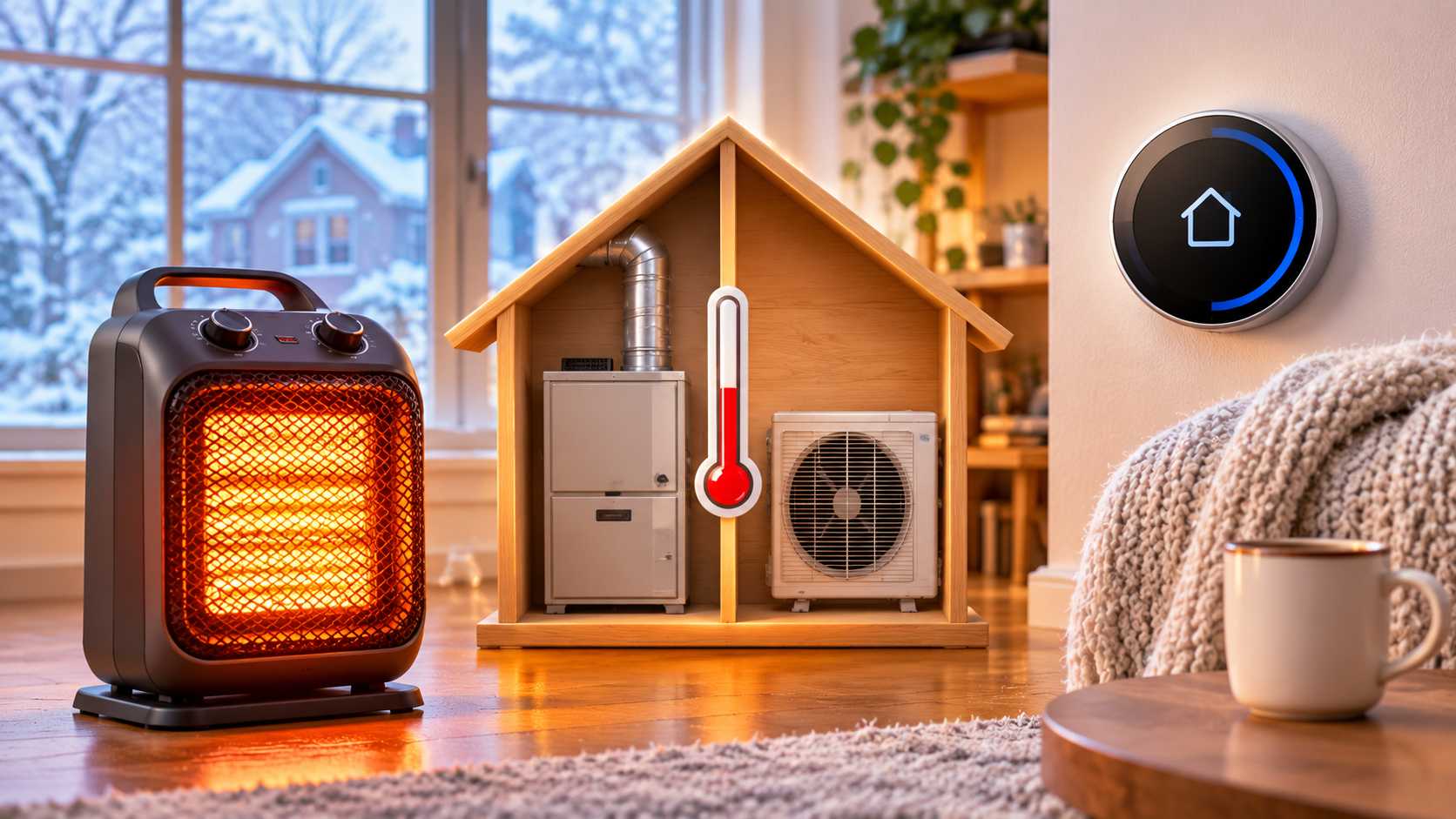
Pittsburgh gets lake-effect snow. Philadelphia gets the damp kind of cold that finds its way inside your coat. By November, plenty of Pennsylvania households are standing at the thermostat arguing with themselves: heat the one room I’m sitting in, or let the furnace take the whole house?
Either can come out cheaper. Which one does depends on how many rooms you’re heating, for how many hours, and what kind of system you’ve got now.
TL;DR
- One room, a few hours: a space heater costs less than running the whole furnace or heat pump for the same stretch.
- Three rooms or all-day heat: central heat and air pulls ahead. A 1,500-watt heater runs roughly 25 to 35 cents an hour, so several of them add up fast.
- A space heater is near-100% efficient but has no reach. It warms the room it’s in and almost nothing past the doorway.
- A heat pump moves heat instead of making it. One unit heats in winter and cools in summer. Air source and ductless are the common residential types in PA.
- Furnace repair fixes most struggling systems. Furnace installation makes sense once the unit hits 15 to 20 years old or repairs keep coming.
- Heat pumps need upkeep. Dirty filters or a blocked outdoor coil cut efficiency fast.
- Never run heaters overnight or unattended. Plug them into the wall, skip extension cords, and turn them off in empty rooms.
- Your supply rate is a separate lever. No equipment choice changes it. A fixed-rate plan locks the price in for the length of the contract.
How a Space Heater Heats a Room?
A plug-in electric heater is about as plain as an appliance gets. Almost every watt it pulls turns into heat. No combustion, no ducts, no warm air leaking out into a crawl space. The Department of Energy’s guide to space heaters points out that this directness is both the appeal and the limit: a space heater warms the room it’s in and almost nothing past the doorway.
Full efficiency, zero reach.
How Central Heating Works: Furnace, Heat Pump, or Both?
A gas furnace burns natural gas, heats air, and pushes it through ducts to every vented room. A heat pump does something odder. It moves heat instead of making it, drawing warmth out of outdoor air (yes, even cold air has some) and concentrating it inside.
How does a heat pump work? Refrigerant picks up heat outside, gets compressed so the temperature climbs, then gives that heat off through an indoor coil. In summer the cycle runs backward and the same unit cools the house. One system, both seasons, which is a big reason heat pumps have caught on across Pennsylvania in the last several years.
The types of heat pumps are worth telling apart. An air source heat pump pulls from outdoor air and is the common residential pick. A ductless heat pump, or mini-split, skips the ductwork and mounts indoor units in the rooms you want conditioned, a real help in older PA houses that were never built with duct chases. Geothermal heat pumps draw from the steady temperature underground; the install is bigger and costs more, so most homeowners comparing space heater vs furnace costs on a normal budget never go that route. Heat pump water heaters run the same technology on water instead of air, and they show up more and more in PA efficiency retrofits.
The Real Cost Comparison.
A space heater is cheap in short bursts. At 1,500 watts it runs roughly 25 to 35 cents an hour, depending on your electric rate. Run one in three or four rooms and you’re close to what central heat costs for the whole house, or past it.
Central heat wins on whole-home comfort, no contest. Where it loses is the evening you only use one room. Then you’re paying to warm hallways and a spare bedroom nobody’s opened since Thursday.
Energy advisors land on a simple rule. One heater, one room, a few hours: the space heater costs less than firing up the furnace or heat pump for the same stretch. Three rooms, or a need that runs all day, and central heat and air pulls ahead.
When a Space Heater Makes Sense?
The home office in the afternoon. The bedroom for the hour before sleep. A converted garage or drafty sunroom that the ducts barely reach. Any day you’d rather drop the house thermostat a few degrees and warm only yourself.
In those spots the heater isn’t competing with your furnace. It covers ground the furnace was never going to cover cheaply.
When Central Heating Wins?
If two or more rooms are in use, or you’re heating through the night, go central. A modern furnace or heat pump spreads warmth evenly, holds humidity steadier, and doesn’t carry the tip-over and overheating risk of several plug-in units running while everyone sleeps.
Safety Math Comes First!
Cost isn’t the only number. Older heaters without tip-over switches or overheat protection are a fire risk, and running more than one at a time raises it. Overnight in a bedroom, or several going unattended, the central system is the safer call whatever the hourly math says. Plug heaters straight into the wall. No extension cords. Never leave one running in an empty room.
Furnace Repair vs. Furnace Installation
Plenty of space-heater talk starts because the furnace is acting up, not because space heaters are cheaper. Short-cycling or lukewarm air from the vents is a furnace repair call, not a replacement call. A cracked heat exchanger or a dirty flame sensor gets fixed.
Furnace installation enters the picture when the unit is 15 to 20 years old, when repair bills keep arriving, or when efficiency has dropped hard from what it delivered new. A new high-efficiency furnace or heat pump costs more up front than one more repair. It also stops an aging system from working harder every year to hit the same temperature.
Heat Pumps as a Pennsylvania Alternative.
Heat pump installation has picked up in PA utility territories like PECO in the southeast and PPL Electric’s footprint further north and west, where both electric and gas rates shape what costs less to run. Homes already heated with electricity have the easier case for switching, since the comparison is resistance heat against heat pump efficiency. Homes on natural gas face a longer payback, weighing current gas prices against the up-front price of electric heat pump equipment. A heat pump vs furnace decision comes down to your current fuel and how well the house holds heat. Heat pump efficiency drops in extreme cold, though modern cold-climate models have closed much of that gap.
Heat pump maintenance deserves more attention than people give it. Dirty filters or a blocked outdoor coil, and efficiency falls fast. Then space heater math starts looking competitive again, which defeats the point of installing one. Heat pump repair costs less than most homeowners expect for common faults like a failing capacitor or a dirty coil, and catching those early beats a whole winter of underperformance. Heat pump installation cost runs higher than a furnace repair or a basic furnace installation, but you’re replacing a heating system and a cooling system in one go, and that changes the comparison.
What Changes Your Bill?
Whichever one you run, none of it changes what you pay per kilowatt-hour or per therm. That’s your supply rate. The EIA’s Winter Fuels Outlook tracks how heating costs move by fuel type each season nationally, and since Pennsylvania homes split between electric and gas heat, your household could get hit by either kind of price swing.
Pennsylvania’s official rate-shopping site lets you compare supplier offers side by side, and it’s worth a look whatever equipment you end up with. A fixed-rate plan locks your supply price for the length of the contract, so a cold snap that spikes market prices for electricity or gas doesn’t spike your bill, no matter which machine is doing the heating.
Habits That Help Either Way.
Pair smart heating habits with whatever equipment you’ve got and the gap narrows further. Keep a steady thermostat schedule and seal the drafts, and switch the heater off when nobody’s in the room. Equipment sets the baseline, but habits can move the bill as far as the hardware does.
Figure Out Your Rate, Not Just Your Heater!
Your supply rate is the other half of the space heater vs furnace question. Shop current Pennsylvania plans from City Power and Gas and lock in a fixed rate before winter demand pushes prices up.
FAQs
Is it cheaper to use a space heater or central heating in Pennsylvania?
A space heater costs less when you’re heating one room for a few hours. Central heating costs less when you’re heating several rooms or heating through the night.
- One room, a few hours: the space heater wins, because the furnace or heat pump would be warming hallways and empty rooms along with yours.
- Three or more rooms, or all-day heat: central heat and air wins, because several plug-in heaters add up to or past the cost of one system heating the whole house.
- Bedroom overnight: central heating is the safer pick regardless of cost.
How much does it cost to run a space heater per hour and per month?
A standard 1,500-watt space heater costs roughly 25 to 35 cents an hour in Pennsylvania, depending on your electric supply and delivery rates. It pulls 1.5 kilowatt-hours every hour it runs, so the math is simple: kilowatt-hours times your rate per kilowatt-hour.
Say you run one for 8 hours a day. That’s about $2 to $2.80 a day, or somewhere around $60 to $85 a month. Your own bill will land differently, so check the rate printed on your latest statement and plug it in.
How many space heaters can I run before central heating is cheaper?
Around three rooms is where the two options meet. At 25 to 35 cents an hour per heater, three heaters running together cost 75 cents to a dollar or more per hour. Many households can heat the whole house with a furnace or heat pump for about that.
The exact tipping point shifts with:
- Your electric and gas rates
- How well the house holds heat
- How efficient your current system is
- How many hours a day the heaters run
If you’re already past two heaters, price out your central system for a week and compare.
Is it safe to leave a space heater on overnight?
No. Fire safety groups and heater manufacturers advise against running a space heater while you sleep or when nobody’s in the room. If you need warmth in a bedroom overnight, central heating or a properly installed ductless heat pump is the safer route.
If you do use a space heater while you’re awake and in the room:
- Pick a model with a tip-over switch and overheat protection.
- Plug it directly into a wall outlet. Skip extension cords and power strips.
- Keep it at least three feet from bedding, curtains, and furniture.
- Turn it off when you leave the room.
Can a space heater trip my breaker?
Yes, and it happens a lot. A 1,500-watt heater draws about 12.5 amps, and a standard household circuit is rated for 15. Add a second heater, a hair dryer, or a vacuum on the same circuit and the breaker trips.
That’s one more reason running several heaters at once is a poor plan. Spreading them across different circuits helps, but it doesn’t fix the cost problem.
How does a heat pump work in a cold Pennsylvania winter?
A heat pump keeps pulling heat from outdoor air even when it’s cold, because air above absolute zero still holds some. Refrigerant absorbs that heat outside, gets compressed to raise its temperature, and releases it indoors through a coil.
Efficiency does drop as temperatures fall. Older models struggled in deep cold. Modern cold-climate heat pumps are built for this, and many keep working well below 0°F. Some homes pair a heat pump with a backup furnace for the coldest stretches, which is how a lot of PA households run theirs.
Is a heat pump cheaper to run than a furnace?
It depends on what you heat with now.
If you currently heat with electric resistance (baseboards, an electric furnace, or space heaters), a heat pump almost always costs less to run. It moves heat instead of converting electricity into it, so it delivers roughly two to three times the heat per unit of electricity.
If you heat with natural gas, the comparison is closer. You’re weighing your gas price against your electric price, plus the up-front cost of the equipment. Payback takes longer, though a heat pump that also replaces your air conditioner shifts the numbers.
Should I repair my furnace or install a new one?
Repair it if the problem is a single failed part. Replace it if the unit is old and repairs are piling up.
Repair makes sense for:
- A dirty flame sensor
- A failing blower motor
- Short-cycling or lukewarm air with no other major symptoms
Installation makes sense when:
- The furnace is 15 to 20 years old
- You’ve paid for repairs more than once in a couple of seasons
- A cracked heat exchanger is the diagnosis
- Your heating bills have climbed without any change in how you use the house
A new unit costs more up front. It also stops the slow loss of an old system working harder each year.
Will a ductless heat pump work in an older Pennsylvania home?
Yes. Ductless heat pumps, or mini-splits, were built for homes without ductwork. An outdoor unit connects to indoor units mounted on the wall of each room you want to heat and cool. No duct chases are needed, which matters in older PA houses where running new ducts would mean tearing into plaster and framing.
The tradeoff is that each indoor unit serves its own zone. A larger house may need several. In return, you control temperature room by room, so you aren’t heating spaces nobody’s using.
What maintenance does a heat pump need?
A heat pump needs a little attention several times a year, and skipping it costs you efficiency fast.
- Filters: check them monthly during heavy use and replace or clean as needed.
- Outdoor coil: keep snow, leaves, and debris cleared from around the unit.
- Professional service: a yearly tune-up checks refrigerant levels and electrical parts.
Common repairs like a failing capacitor or a dirty coil usually cost less than homeowners expect, and catching them early beats limping through a winter at poor efficiency.
Does a fixed-rate electricity plan lower my heating bill?
A fixed-rate plan doesn’t make your bill lower. It makes it predictable. It locks your supply price per kilowatt-hour for the length of the contract, so a cold snap that spikes market prices won’t raise your rate mid-contract.
You can compare supplier offers on Pennsylvania’s official rate-shopping site. Only the supply portion of your bill is up for shopping. Your utility’s delivery charge stays the same whichever supplier you pick. Natural gas customers can often shop supply too, depending on the utility’s territory.
What’s the cheapest way to lower my heating bill without changing equipment?
Small changes add up, and they apply whether you use a furnace, a heat pump, or space heaters.
- Set a steady thermostat schedule instead of adjusting by hand all day.
- Seal drafts around doors and windows.
- Lower the house temperature a few degrees and use a space heater only in the room you’re in.
- Switch heaters off when the room is empty.
- Check your supply rate against other offers before winter demand drives prices up.


