Introduction
Every household leaves an environmental footprint, but the size of that footprint depends on far more than how often you drive or whether you recycle. In Pennsylvania, factors such as older homes, seasonal heating demands, electricity consumption, transportation habits, and appliance efficiency all contribute to the amount of greenhouse gases produced each year.
The good news is that reducing your carbon footprint doesn’t require completely changing your lifestyle. Many of the most effective improvements such as making your home more energy efficient, upgrading aging equipment, reducing unnecessary energy use, and choosing cleaner electricity options can also lower your monthly utility bills while improving year-round comfort.
Pennsylvania homeowners are in a unique position because the state offers a combination of energy efficiency programs, competitive electricity choice, and growing access to renewable energy. Understanding where your household emissions come from allows you to prioritize improvements that deliver meaningful environmental benefits without wasting money on changes that produce little impact.
At City Power and Gas, we believe that better energy decisions start with better information. Whether you’re looking to reduce your environmental impact, improve your home’s efficiency, or better understand how your electricity choices influence carbon emissions, this guide provides practical, Pennsylvania-focused recommendations based on current energy practices and trusted industry guidance.
Throughout this guide, you’ll gain a clear understanding of what a household carbon footprint actually includes, why Pennsylvania homes have unique opportunities to reduce emissions, and which home improvements deliver the greatest environmental impact. Whether you’re looking to make small everyday changes or invest in larger home improvements, this guide will help you prioritize the actions that make the biggest difference for both your home and the environment.
TL;DR
- A household carbon footprint measures the greenhouse gas emissions generated by your home’s energy use, transportation, water heating, appliances, and everyday lifestyle choices.
- For many Pennsylvania households, home heating, electricity consumption, and transportation are the largest contributors to annual carbon emissions.
- Improving insulation, sealing air leaks, upgrading heating systems, and replacing inefficient appliances often deliver greater long-term carbon reductions than small lifestyle changes alone.
- Pennsylvania homeowners can benefit from utility rebates, federal tax incentives, weatherization assistance, and energy efficiency programs that help lower both emissions and energy costs.
- Choosing renewable electricity through Pennsylvania’s competitive electricity market can further reduce the environmental impact of your household electricity use.
- A household carbon footprint calculator helps identify which improvements will have the greatest impact based on your home’s energy use and lifestyle.
- Reducing your carbon footprint is most effective when approached as a long-term plan rather than a collection of isolated actions, allowing you to prioritize improvements that provide the greatest environmental and financial return.
What Your Carbon Footprint Looks Like in Pennsylvania

Before deciding how to reduce carbon footprint, it’s important to understand what creates it in the first place. Every Pennsylvania household produces greenhouse gas emissions through daily activities such as heating the home, using electricity, driving, heating water, and purchasing goods and services. The combination of these emissions forms your household carbon footprint.
While the concept is the same everywhere, Pennsylvania’s climate, housing stock, transportation patterns, and electricity generation mix make its carbon footprint different from many other states. Understanding these factors helps homeowners focus on improvements that deliver the greatest environmental and financial benefits.
What Is Carbon Footprint?
A household carbon footprint is the total amount of greenhouse gases released directly and indirectly by your daily activities. It is typically measured in carbon dioxide equivalent (CO₂e), which accounts for carbon dioxide along with other greenhouse gases such as methane and nitrous oxide.
For most households, carbon emissions come from multiple sources rather than a single activity. Electricity consumption, home heating, transportation, water heating, appliances, food choices, and household waste all contribute to your overall environmental impact. Rather than focusing on one area alone, reducing your carbon footprint means understanding how these activities work together and identifying the opportunities with the greatest potential for improvement.
Why Pennsylvania Households Have a Different Carbon Profile
Pennsylvania homeowners face a unique combination of energy challenges and opportunities. The state experiences cold winters, warm summers, and significant seasonal heating and cooling demands that increase annual household energy consumption.
In addition, many homes across Pennsylvania were built decades ago, before modern energy-efficiency standards became common. Older insulation, aging HVAC systems, drafty windows, and inefficient appliances often require more energy to maintain comfortable indoor temperatures, increasing both utility costs and greenhouse gas emissions.
Transportation patterns also vary considerably across the state. While residents in Philadelphia and Pittsburgh may have greater access to public transportation, suburban and rural communities often depend on personal vehicles for work, school, and everyday travel, making transportation another significant contributor to household emissions.
How Pennsylvania’s Energy Mix Influences Your Carbon Footprint
Unlike states that rely heavily on a single fuel source, Pennsylvania generates electricity from a diverse mix of natural gas, nuclear power, renewable energy, and other energy resources. As a result, the environmental impact of every kilowatt-hour your home consumes depends on both how much electricity you use and where that electricity comes from.
This means that improving your home’s energy efficiency remains one of the most effective ways to reduce carbon emissions. Using less electricity lowers overall demand regardless of the energy source, while choosing renewable electricity options where available can further reduce the carbon intensity of your household energy use.
For homeowners comparing electricity suppliers, Pennsylvania’s competitive electricity market also provides opportunities to select plans that better align with long-term sustainability goals. At City Power and Gas, we encourage consumers to understand not only the price of electricity but also how their energy choices contribute to their broader environmental objectives.
Why Understanding Your Carbon Footprint Comes Before Reducing It
One of the biggest mistakes homeowners make is assuming that every sustainability tip has the same impact. In reality, replacing an aging heating system or improving insulation may reduce significantly more emissions than dozens of smaller lifestyle changes combined.
Understanding where your household produces the most greenhouse gas emissions allows you to prioritize improvements based on their potential impact rather than guesswork. By focusing first on high-energy systems such as heating, cooling, water heating, and electricity consumption, Pennsylvania homeowners can often achieve meaningful reductions in both carbon emissions and long-term energy costs.
The Biggest Opportunities to Reduce Your Carbon Footprint in Pennsylvania
If you’re wondering how to reduce your carbon footprint, it’s important to know that not every action has the same environmental impact. While recycling, carrying reusable shopping bags, or switching off lights are all positive habits, they typically reduce far fewer greenhouse gas emissions than improvements that lower the amount of energy your home consumes every day.
For most Pennsylvania households, the greatest opportunities to reduce carbon emissions come from four key areas: improving home energy efficiency, reducing heating and cooling demand, lowering electricity consumption, and making smarter transportation decisions. By focusing on these high-impact areas first, homeowners can often achieve meaningful reductions in both their household carbon footprint and annual energy costs.
Rather than trying to make dozens of small lifestyle changes at once, start by identifying where your home uses the most energy. This allows you to invest your time and money where you’ll see the greatest long-term environmental and financial return.
Reduce Your Carbon Footprint by Improving Heating and Cooling Efficiency
For most Pennsylvania homes, heating and cooling account for the largest share of residential energy consumption. According to the U.S. Department of Energy, space heating is one of the biggest energy expenses for households, particularly in states with long heating seasons like Pennsylvania.
Many homes across the state were built before today’s energy-efficiency standards existed. Drafty windows, inadequate insulation, aging furnaces, and poorly sealed attics often force heating and cooling systems to work much harder than necessary. As a result, homeowners use more electricity or fuel while producing higher greenhouse gas emissions.
Before replacing expensive equipment, it’s often worth improving the building envelope. Air sealing, upgrading attic insulation, sealing ductwork, and eliminating drafts can significantly reduce heating and cooling demand regardless of whether your home uses natural gas, electricity, propane, or heating oil. These improvements frequently deliver some of the highest returns on investment because they lower energy use every day of the year.
Once the home’s efficiency has improved, upgrading to high-efficiency HVAC systems, installing programmable or smart thermostats, and maintaining heating equipment regularly can further reduce both energy consumption and your overall carbon footprint.
Expert Tip
Many homeowners assume replacing a furnace should be their first investment. In reality, reducing the amount of heat your home loses often produces greater long-term savings than installing a new heating system alone. Improving insulation and sealing air leaks allows any heating system old or new to operate more efficiently.
Reduce Household Carbon Emissions Through Smarter Electricity Use
Electricity powers nearly every aspect of modern life, from refrigeration and lighting to entertainment systems, computers, kitchen appliances, and home offices. While each appliance may seem insignificant on its own, together they create a substantial portion of a home’s annual energy demand.
One of the most effective ways to reduce your carbon footprint is to lower unnecessary electricity consumption without compromising comfort or convenience. Replacing inefficient appliances with ENERGY STAR® certified models, switching to LED lighting, eliminating standby or “phantom” power, and using appliances during full loads all contribute to lower household electricity use throughout the year.
Pennsylvania homeowners also have an advantage that residents in many states do not. Because Pennsylvania has a competitive electricity market, many households have the opportunity to compare electricity suppliers and choose plans that better align with their sustainability goals. While reducing electricity demand should always come first, selecting renewable electricity options can further lower the environmental impact of the electricity your home consumes.
At City Power and Gas, we encourage homeowners to think about both how much energy they use and where that energy comes from. Combining an energy-efficient home with cleaner electricity choices creates a stronger long-term strategy for reducing household emissions.
Expert Tip
Replacing every appliance immediately is rarely the most cost-effective approach. Instead, prioritize older appliances that consume the most electricity such as refrigerators, HVAC systems, water heaters, and clothes dryers as they reach the end of their useful life.
Lower Your Transportation Carbon Footprint with Smarter Travel Choices
Transportation remains one of the largest contributors to greenhouse gas emissions for many Pennsylvania households, but the best way to reduce these emissions depends on where you live.
Residents of Philadelphia and Pittsburgh may have access to commuter rail, public transit, cycling infrastructure, and walkable neighborhoods. In contrast, many suburban and rural communities rely heavily on personal vehicles for commuting, school, healthcare, and shopping. Because travel patterns differ significantly across the state, there is no single solution that works for every household.
Rather than focusing solely on driving less, homeowners can reduce transportation-related emissions by combining errands, maintaining proper tire pressure, avoiding rapid acceleration and excessive idling, carpooling when practical, and choosing fuel-efficient or electric vehicles when replacing an existing car. Even modest improvements in fuel efficiency can produce meaningful reductions in annual carbon emissions over the lifetime of a vehicle.
Expert Tip
Before purchasing a new electric vehicle, consider whether reducing unnecessary trips or improving fuel efficiency in your current vehicle could provide similar environmental benefits at a much lower upfront cost.
Reduce Your Carbon Footprint by Improving Water Heating Efficiency
Water heating is one of the most overlooked contributors to a household’s carbon footprint. Every shower, dishwasher cycle, load of laundry, and hot water tap requires energy, making water heating a consistent source of household emissions throughout the year.
Fortunately, many improvements are relatively inexpensive. Lowering your water heater temperature to manufacturer-recommended settings, installing low-flow showerheads, insulating hot water pipes, repairing leaks, and replacing aging water heaters with high-efficiency models can all reduce energy consumption without affecting daily comfort.
For households planning larger renovations, heat pump water heaters may offer additional long-term energy savings while reducing greenhouse gas emissions compared to older conventional systems.
Build Better Everyday Energy Habits
Major home improvements deliver the greatest reductions in carbon emissions, but everyday habits still play an important supporting role. Small actions repeated consistently across an entire year can contribute to meaningful energy savings while reinforcing a more sustainable lifestyle.
Examples include:
- Running dishwashers and washing machines only with full loads.
- Washing clothes in cold water whenever appropriate.
- Turning off lights in unused rooms.
- Unplugging devices that continuously draw standby power.
- Maximizing natural daylight before using artificial lighting.
- Maintaining appliances according to manufacturer recommendations.
Although none of these actions alone will dramatically reduce your household carbon footprint, together they help eliminate unnecessary energy waste and improve the overall efficiency of your home.
Prioritize High-Impact Improvements Before Low-Impact Changes
One of the biggest misconceptions about how to reduce your carbon footprint is that every sustainability action delivers the same environmental benefit. In reality, replacing inefficient heating equipment, improving insulation, reducing electricity consumption, and choosing cleaner energy sources typically produce significantly greater carbon reductions than dozens of smaller lifestyle adjustments combined.
For Pennsylvania homeowners, the most effective strategy is to begin with improvements that address the home’s largest sources of energy use before moving on to smaller daily habits. This structured approach not only reduces greenhouse gas emissions more effectively but also creates lasting savings through lower energy consumption year after year.
By understanding where your home produces the most emissions, you can build a carbon reduction plan that is practical, affordable, and tailored to your household rather than relying on generic sustainability advice.
They don’t explain how to interpret the results or what to do next.
For City Power and Gas, we should make this section feel like an energy consultation rather than just embedding a tool.
Calculate Your Household Carbon Footprint
One of the most effective ways to reduce your carbon footprint is to understand where your household produces the most greenhouse gas emissions. While general sustainability advice can be helpful, every home uses energy differently. The age of your property, heating system, number of occupants, driving habits, appliance efficiency, and electricity consumption all influence your household’s overall environmental impact.
Calculating your household carbon footprint provides a practical starting point. Instead of guessing which improvements will make the biggest difference, you can identify the areas responsible for the largest share of your emissions and prioritize actions that deliver meaningful results.
Our Carbon Footprint Calculator is designed to help Pennsylvania homeowners estimate their annual household emissions using everyday information about their home and lifestyle. The results are intended to provide guidance, not an exact scientific measurement, helping you understand where changes are likely to have the greatest impact.
What Information Does a Carbon Footprint Calculator Use?
Most household carbon footprint calculators estimate emissions by evaluating several major categories of daily energy use and consumption, including:
- Household electricity consumption.
- Home heating fuel (natural gas, electricity, heating oil, propane, or other sources).
- Water heating.
- Vehicle ownership and annual driving distance.
- Air travel frequency.
- Household size.
- General lifestyle and consumption habits.
Each category contributes differently to your overall carbon footprint. For many Pennsylvania households, heating, electricity use, and transportation account for the largest share of annual greenhouse gas emissions, making these areas the most effective starting points for improvement.
Understanding Your Carbon Footprint Results
Your calculator results should be viewed as a decision-making tool rather than a score to pass or fail. The goal isn’t to achieve a perfect number overnight—it’s to identify where your household has the greatest opportunity to reduce emissions over time.
For example:
- If heating accounts for the largest share of your emissions, improving insulation or upgrading your HVAC system may deliver the biggest reduction.
- If electricity use is significantly higher than average, replacing inefficient appliances or improving lighting efficiency may provide better long-term savings.
- If transportation is your largest contributor, changes such as combining trips, improving fuel efficiency, or considering an electric vehicle in the future may have the greatest impact.
By focusing on your highest-emission categories first, you can make smarter investments instead of trying to change every aspect of your lifestyle at once.
Example: Two Pennsylvania Homes Can Have Very Different Carbon Footprints
Even homes located in the same neighborhood can produce significantly different levels of greenhouse gas emissions.
Example 1: Older Family Home
- Built in the 1970s.
- Four occupants.
- Natural gas heating.
- Original insulation.
- Older HVAC system.
- Two gasoline vehicles.
- High annual electricity consumption.
In this scenario, the greatest opportunities for reducing carbon emissions would likely include improving insulation, sealing air leaks, upgrading heating equipment, and replacing older appliances as they reach the end of their useful life.
Example 2: Modern Energy-Efficient Home
- Built within the last decade.
- Two occupants.
- High-efficiency heat pump.
- ENERGY STAR® appliances.
- Smart thermostat.
- LED lighting throughout.
- Renewable electricity plan.
- One hybrid vehicle.
Although this household already has a relatively low carbon footprint, further reductions may come from optimizing energy use, reducing unnecessary electricity consumption, and continuing to make sustainable transportation and purchasing decisions.
These examples illustrate why a personalized assessment is more valuable than generic sustainability advice. The best strategy depends on your home’s unique characteristics rather than a one-size-fits-all checklist.
Use Your Results to Build a Long-Term Carbon Reduction Plan
Reducing your carbon footprint is most effective when approached as an ongoing process rather than a single project. Instead of trying to implement every recommendation immediately, prioritize improvements based on three factors:
| Priority | Focus Area | Why It Matters |
|---|---|---|
| High | Heating, cooling, insulation, electricity use | Largest potential reduction in household emissions and energy costs. |
| Medium | Water heating, appliances, lighting | Improves overall energy efficiency while supporting long-term savings. |
| Long-Term | Renewable electricity, vehicle replacement, major home upgrades | Builds on earlier improvements to further reduce your household’s environmental impact over time. |
At City Power and Gas, we encourage homeowners to use their carbon footprint results as the foundation for smarter energy decisions. By understanding where your household consumes the most energy today, you can create a realistic improvement plan that aligns with both your sustainability goals and your budget.
High-Impact Home Upgrades That Deliver the Greatest Carbon Reduction
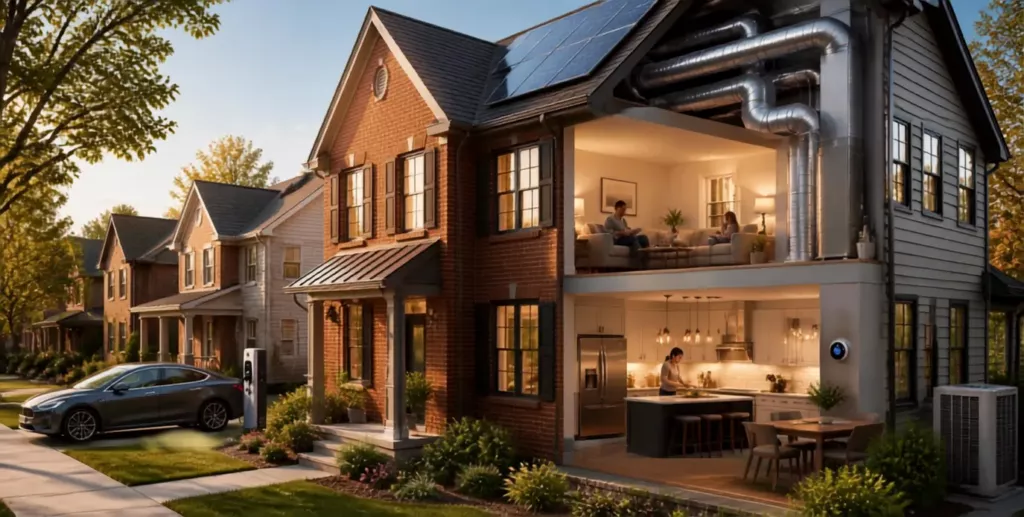
If you’re serious about reducing your carbon footprint, it’s natural to ask where your investment will have the greatest impact. Should you replace your furnace? Install new windows? Upgrade your appliances? Or switch to renewable electricity?
The answer depends on how your home currently performs.
Many homeowners assume that the newest or most expensive upgrade automatically delivers the biggest environmental benefit. In reality, the most effective improvements are those that reduce the amount of energy your home needs every day. That’s why energy professionals typically recommend addressing the home’s overall efficiency before investing in new equipment.
For Pennsylvania homeowners, a strategic approach not only reduces greenhouse gas emissions but also improves indoor comfort, lowers monthly energy bills, and increases the long-term value of the property.
Improve Insulation Before Replacing Heating Equipment
One of the most common mistakes homeowners make is replacing an aging furnace or heat pump without first addressing the home’s insulation and air leakage.
Even the most efficient heating system cannot perform well if warm air continuously escapes through the attic, walls, windows, or poorly sealed ductwork. The heating equipment simply works harder to maintain the same indoor temperature, consuming more energy and producing higher carbon emissions.
Pennsylvania’s long heating season makes this particularly important. Homes built several decades ago often have insulation levels that fall well below today’s recommendations, allowing significant heat loss throughout the winter.
Before investing thousands of dollars in new mechanical equipment, consider improvements such as:
- Air sealing around windows, doors, and penetrations.
- Upgrading attic insulation.
- Sealing and insulating ductwork.
- Addressing basement or crawlspace air leaks.
- Improving wall insulation during renovations.
These improvements reduce the overall heating demand of the home, allowing existing or future HVAC equipment to operate far more efficiently.
Why it matters
Reducing the amount of energy your home requires is often the fastest way to lower your household carbon footprint while improving comfort in every season.
Upgrade Heating Systems When Replacement Becomes Necessary
Heating is one of the largest contributors to residential energy consumption in Pennsylvania. As heating systems age, they typically become less efficient, require more maintenance, and consume more fuel to produce the same level of comfort.
That doesn’t mean every older system should be replaced immediately.
If your current equipment is operating safely and efficiently, regular maintenance may extend its useful life while keeping energy consumption under control. However, if your heating system is approaching the end of its expected lifespan, replacing it with a higher-efficiency alternative can significantly reduce both annual energy use and greenhouse gas emissions.
Depending on your home and heating needs, replacement options may include:
- High-efficiency natural gas furnaces.
- Air-source heat pumps.
- Ground-source (geothermal) heat pumps.
- High-efficiency boilers.
- Dual-fuel heating systems where appropriate.
The best solution depends on your home’s insulation, local climate, existing ductwork, utility costs, and long-term energy goals rather than simply choosing the newest technology available.
Expert Insight
The most efficient heating system is one that is correctly sized for the home. Oversized or undersized equipment can reduce efficiency, increase operating costs, and shorten equipment lifespan.
Replace Inefficient Appliances Based on Energy Use Not Age Alone
Many homeowners believe they should replace every older appliance to reduce their carbon footprint. In reality, replacing functioning equipment too early isn’t always the most environmentally responsible decision.
Manufacturing new appliances also requires energy and raw materials. The environmental benefit comes when the reduction in operating energy outweighs the emissions associated with producing and transporting the replacement appliance.
Rather than replacing everything at once, prioritize appliances that consume the most electricity or fuel, such as:
- Refrigerators.
- Water heaters.
- HVAC equipment.
- Clothes dryers.
- Older washing machines.
When replacement becomes necessary, selecting ENERGY STAR® certified appliances can reduce ongoing energy consumption while maintaining the same level of performance.
Expert Insight
Focus first on appliances that operate every day. A refrigerator running continuously has a much greater influence on annual electricity consumption than a small kitchen appliance used only occasionally.
Use Smart Energy Controls to Reduce Everyday Waste
Technology cannot compensate for an inefficient home, but it can help homeowners avoid unnecessary energy consumption once the fundamentals have been addressed.
Modern smart home technologies allow households to better manage heating, cooling, lighting, and electricity use without requiring constant manual adjustments.
Examples include:
- Smart thermostats that automatically adjust temperatures based on occupancy.
- Smart lighting controls.
- Advanced power strips that reduce standby electricity use.
- Smart water heater scheduling.
- Home energy monitoring systems.
These tools help homeowners identify waste, monitor consumption patterns, and make informed decisions about how energy is used throughout the day.
For many Pennsylvania households, these relatively small upgrades complement larger efficiency improvements and help maintain long-term energy savings.
Prioritize Upgrades That Deliver the Greatest Long-Term Value
Not every home improvement offers the same return on investment. Some upgrades reduce energy use immediately, while others provide gradual benefits over many years.
The table below provides a practical framework for prioritizing improvements based on their potential impact.
| Home Upgrade | Typical Carbon Reduction Potential | Energy Bill Savings | Best Time to Consider |
|---|---|---|---|
| Air sealing and insulation | Very High | High | As early as possible |
| HVAC replacement | High | High | When existing equipment reaches end of life |
| Heat pump water heater | Medium to High | Medium | During water heater replacement |
| ENERGY STAR® appliances | Medium | Medium | As appliances need replacement |
| Smart thermostat | Medium | Medium | Anytime |
| LED lighting | Low to Medium | Low to Medium | Immediate, low-cost improvement |
| Renewable electricity plan | Supports lower indirect emissions | Varies | After improving energy efficiency |
Think Like an Energy Advisor, Not a Shopper
The biggest mistake homeowners make is treating each upgrade as an isolated purchase.
An energy-efficient home works as a complete system. Insulation affects HVAC performance. Efficient windows reduce heating demand. Smart controls optimize equipment operation. Efficient appliances lower electricity consumption. Renewable electricity further reduces the environmental impact of the energy your home uses.
At City Power & Gas, we encourage homeowners to think about reducing their carbon footprint as a long-term strategy rather than a series of unrelated purchases. By addressing the largest sources of household energy consumption first and making informed upgrades over time, Pennsylvania homeowners can create homes that are more comfortable, more efficient, and better prepared for the future.
How Pennsylvania’s Electricity Market Can Help Reduce Your Carbon Footprint
Reducing your household carbon footprint isn’t only about using less energy it’s also about understanding where your electricity comes from. Two households with similar electricity consumption can have different environmental impacts depending on the energy sources used to generate the power they consume.
For Pennsylvania homeowners, this creates an important opportunity. Unlike many regulated states, Pennsylvania’s competitive electricity market allows many residential customers to compare electricity suppliers and choose plans that better align with their financial and environmental priorities. While reducing overall energy consumption should always be the first step, selecting cleaner electricity options can further lower the carbon emissions associated with your home’s electricity use.
Why Your Electricity Source Matters
Every time you switch on a light, charge your phone, or run your dishwasher, electricity is generated somewhere on the regional power grid. The greenhouse gas emissions associated with that electricity depend on the mix of energy resources used to produce it.
Pennsylvania’s electricity supply comes from a diverse combination of:
- Natural gas
- Nuclear energy
- Renewable energy sources such as wind and solar
- Hydroelectric power
- Other generation resources
Each source has a different carbon intensity. Renewable energy sources generally produce significantly fewer greenhouse gas emissions during electricity generation than fossil fuel-based generation, while nuclear energy provides large amounts of electricity without direct carbon dioxide emissions during operation.
Although homeowners cannot control how the regional grid operates, they can often make informed choices about the electricity plans that support their household’s long-term sustainability goals.
Energy Efficiency Should Always Come First
One of the most common misconceptions is that choosing a renewable electricity plan alone will dramatically reduce a household’s environmental impact.
In reality, the biggest opportunity to reduce your carbon footprint usually comes from lowering overall energy consumption first.
A home that wastes electricity through poor insulation, inefficient appliances, or outdated heating systems will continue consuming unnecessary energy regardless of where that electricity comes from. By improving energy efficiency before changing electricity plans, homeowners reduce demand on the grid while maximizing the environmental benefits of cleaner energy sources.
Think of it this way:
- Step 1: Reduce the amount of energy your home needs.
- Step 2: Improve how efficiently your home uses electricity.
- Step 3: Consider electricity plans that support your sustainability goals.
This layered approach delivers greater long-term carbon reductions than focusing on any single improvement in isolation.
Renewable Electricity Can Support Long-Term Carbon Reduction Goals
Once you’ve improved your home’s energy efficiency, renewable electricity can become an important part of your long-term sustainability strategy.
Many Pennsylvania homeowners choose renewable electricity plans because they want to reduce the indirect emissions associated with their household electricity use while supporting continued investment in cleaner energy generation.
Depending on the electricity supplier and plan selected, renewable electricity options may source power from renewable energy resources or include Renewable Energy Certificates (RECs) that help encourage the development of additional renewable generation.
For homeowners interested in reducing their environmental impact, renewable electricity works best as part of a broader strategy that also includes efficient appliances, better insulation, responsible energy use, and smarter heating and cooling practices.
Making Smarter Energy Choices Starts with Better Information
Pennsylvania’s competitive electricity market gives homeowners more flexibility than many consumers across the country, but comparing electricity plans involves more than simply looking at price.
When evaluating electricity suppliers, it’s worth considering factors such as:
- Renewable energy options.
- Contract terms.
- Pricing transparency.
- Customer service.
- Billing structure.
- Long-term energy goals.
At City Power & Gas, we believe that reducing your carbon footprint starts with informed decision-making. Understanding both how much electricity your household uses and the electricity options available to you allows homeowners to make choices that support their budget, comfort, and sustainability objectives without sacrificing reliability.
Electricity Choice Is One Part of a Bigger Sustainability Strategy
Choosing cleaner electricity is an important step, but it shouldn’t replace investments that reduce energy demand. Homes that combine efficient insulation, high-performance heating systems, smart energy habits, ENERGY STAR® appliances, and renewable electricity plans are generally better positioned to lower both greenhouse gas emissions and long-term energy costs.
Rather than viewing electricity choice as a standalone solution, Pennsylvania homeowners should see it as one component of a comprehensive carbon reduction plan. When paired with practical energy-efficiency improvements, it becomes another tool that supports a more sustainable and energy-conscious home.
Pennsylvania Energy Efficiency Programs Worth Exploring
Reducing your carbon footprint doesn’t always require paying the full cost of home improvements yourself. Pennsylvania homeowners may have access to utility rebates, federal energy and tax incentives, financing programs, and local energy-efficiency initiatives that can significantly reduce the cost of upgrading their homes.
The availability of these programs depends on your utility provider, location, household income, and the type of improvement you’re planning. While eligibility requirements vary, understanding what’s available before starting a project can help you maximize savings while reducing your household’s long-term carbon emissions.
Rather than viewing incentives as the primary reason to upgrade, think of them as an opportunity to accelerate improvements that already make financial and environmental sense.
Utility Energy Efficiency Programs
Many electric and natural gas utilities across Pennsylvania offer programs designed to help customers reduce energy consumption and improve home efficiency.
Depending on your utility provider, you may find incentives for:
- Home energy assessments.
- Smart thermostats.
- High-efficiency HVAC equipment.
- Heat pump installations.
- Insulation and air sealing.
- ENERGY STAR® appliances.
- Water heating upgrades.
- LED lighting improvements.
Programs offered by utilities such as PECO, PPL Electric Utilities, Duquesne Light Company, and FirstEnergy Pennsylvania are updated periodically, so it’s worth reviewing current offerings before beginning any major home improvement project.
For homeowners planning multiple upgrades, starting with a professional home energy assessment can help identify the improvements likely to deliver the greatest reduction in both energy use and greenhouse gas emissions.
Federal Tax Credits Can Lower Upgrade Costs
In addition to state and utility programs, many Pennsylvania homeowners may qualify for federal incentives that encourage investments in energy-efficient homes.
Depending on current program requirements, eligible improvements may include:
- High-efficiency heat pumps.
- Heat pump water heaters.
- Insulation upgrades.
- Exterior doors and windows.
- Electrical panel improvements.
- Certain renewable energy systems.
Because incentive programs change over time, homeowners should always confirm current eligibility requirements before making purchasing decisions or beginning installation work.
Weatherization Can Deliver Some of the Highest Returns
One of the most effective and often overlooked ways to reduce your carbon footprint is improving the home’s building envelope.
Weatherization focuses on reducing unnecessary heat loss and air leakage through measures such as:
- Air sealing.
- Attic insulation.
- Wall insulation.
- Basement and crawlspace improvements.
- Duct sealing.
- Window and door weatherstripping.
For many older Pennsylvania homes, weatherization can reduce energy demand before replacing expensive equipment. This means existing heating and cooling systems operate more efficiently, lowering both utility costs and household greenhouse gas emissions throughout the year.
In many cases, improving insulation first delivers a better long-term return than immediately replacing HVAC equipment.
Financing Options Can Make Larger Projects More Affordable
Many homeowners postpone energy-efficiency improvements because of upfront costs rather than long-term value.
Pennsylvania offers several financing opportunities that may help spread the cost of qualifying energy improvements over time, making projects such as HVAC replacements, insulation upgrades, and high-efficiency equipment more financially manageable.
When comparing financing options, look beyond monthly payments and consider:
- Expected annual energy savings.
- Equipment lifespan.
- Maintenance costs.
- Potential utility rebates.
- Available tax incentives.
Evaluating the full financial picture often shows that investing in energy efficiency can provide long-term value while supporting your carbon reduction goals.
Choose Improvements Based on Impact, Not Incentives Alone
Incentives should support smart energy decisions, not determine them.
For example, replacing an appliance simply because it qualifies for a rebate may not produce the same environmental benefit as improving insulation or upgrading an aging heating system that accounts for a much larger share of your home’s energy use.
Before committing to any project, consider three questions:
- Will this significantly reduce my household’s energy consumption?
- Will it lower greenhouse gas emissions over the long term?
- Will it improve the overall efficiency and comfort of my home?
Answering these questions helps ensure every investment contributes toward a meaningful reduction in your household carbon footprint rather than simply taking advantage of an available rebate.
Expert Insight: Build Your Upgrade Plan in Stages
Trying to complete every home improvement project at once can be overwhelming and expensive. A phased approach allows homeowners to improve efficiency over time while taking advantage of available rebates and incentives as they become available.
A practical sequence often looks like this:
- Start with a home energy assessment.
- Address insulation and air sealing.
- Upgrade heating and cooling equipment when replacement is necessary.
- Replace older appliances with high-efficiency models as they reach the end of their lifespan.
- Consider renewable electricity options and additional energy-saving technologies once overall household energy demand has been reduced.
This strategy ensures that each improvement builds on the previous one, maximizing both environmental benefits and long-term energy savings.
Small Changes vs. Major Home Improvements: Where Should You Start?
If you’ve reached this point, you probably realize there isn’t a single solution for reducing your household carbon footprint. Every improvement from switching to LED bulbs to upgrading your heating system can contribute to lower greenhouse gas emissions. The challenge isn’t deciding whether to make changes; it’s deciding which changes should come first.
For most Pennsylvania homeowners, the best approach is to prioritize improvements based on impact, affordability, and timing. Some actions require little or no investment and can begin immediately, while others are larger capital projects that deliver the greatest environmental and financial benefits over many years.
Rather than trying to do everything at once, build a phased plan that matches your home’s needs and your available budget.
If Your Budget Is Under $250
Small investments won’t transform your home’s carbon footprint overnight, but they can eliminate unnecessary energy waste and establish better energy habits.
Consider prioritizing:
- Replacing remaining incandescent bulbs with LED lighting.
- Installing weatherstripping around drafty doors.
- Sealing small air leaks around windows.
- Adjusting your water heater temperature.
- Using smart power strips to reduce standby electricity.
- Scheduling HVAC maintenance.
- Replacing HVAC filters regularly.
These improvements are inexpensive, relatively easy to complete, and can reduce unnecessary energy consumption throughout the year.
If Your Budget Is Between $250 and $2,500
This budget range allows homeowners to make improvements that begin addressing larger sources of household energy use.
Examples include:
- Installing a smart thermostat.
- Adding attic insulation.
- Completing professional air sealing.
- Upgrading to ENERGY STAR® appliances as older units fail.
- Installing low-flow plumbing fixtures.
- Completing a professional home energy assessment.
Many of these improvements qualify for rebates or incentive programs, making them even more cost-effective over the long term.
If You’re Planning Major Home Improvements
When larger renovations or equipment replacements are already planned, they provide an excellent opportunity to significantly reduce your household carbon footprint.
High-impact investments may include:
- Replacing an aging heating or cooling system.
- Installing a heat pump.
- Replacing inefficient windows during renovations.
- Upgrading insulation throughout the home.
- Replacing an older water heater with a high-efficiency model.
- Improving ductwork or ventilation systems.
Because these projects often involve higher upfront costs, reviewing available Pennsylvania rebate programs and federal tax incentives before beginning work can substantially reduce overall project expenses.
Compare Improvements by Impact
Not every upgrade delivers the same environmental return. The table below provides a practical comparison of common improvements for Pennsylvania homeowners.
| Improvement | Typical Upfront Cost | Carbon Reduction Potential | Long-Term Energy Savings |
|---|---|---|---|
| LED lighting | Low | Low to Medium | Medium |
| Air sealing | Low to Medium | High | High |
| Attic insulation | Medium | Very High | High |
| Smart thermostat | Medium | Medium | Medium |
| HVAC replacement | High | High | High |
| Heat pump water heater | High | Medium to High | Medium |
| ENERGY STAR® appliances | Medium to High | Medium | Medium |
| Renewable electricity plan | Low | Supports lower indirect emissions | Varies |
Don’t Chase Perfection Focus on Progress
One of the biggest misconceptions about sustainability is that reducing your carbon footprint requires making every possible improvement immediately. In reality, most households lower their emissions gradually over several years as equipment reaches the end of its useful life, renovations are completed, and new technologies become practical.
A homeowner who improves insulation this year, replaces an aging furnace next year, upgrades appliances over time, and later chooses a renewable electricity plan is often making more financially sustainable and environmentally effective decisions than someone attempting to complete every project at once.
The goal isn’t to build a perfect home overnight. It’s to make informed decisions that steadily reduce energy consumption and greenhouse gas emissions while improving comfort and controlling long-term costs.
At City Power & Gas, we encourage Pennsylvania homeowners to think beyond quick fixes. The most successful carbon reduction plans are built on practical priorities, thoughtful investments, and continuous improvement rather than one-time actions.
Common Carbon Reduction Mistakes Pennsylvania Homeowners Make
Reducing your household carbon footprint isn’t just about making improvements—it’s about making the right improvements in the right order.
Many homeowners invest time and money into projects they believe will significantly reduce their environmental impact, only to discover later that the changes delivered limited results. In many cases, the issue isn’t a lack of effort; it’s a lack of strategy.
Avoiding the following mistakes can help you maximize both the environmental and financial return on every energy-related decision.
Focusing on Small Changes While Ignoring Major Energy Losses
Simple actions such as switching to LED lighting, unplugging electronics, or recycling are worthwhile habits. However, these measures often have a much smaller impact than improving the efficiency of your home’s heating system or reducing heat loss through home insulation and air sealing.
For many Pennsylvania homes, heating accounts for a substantial share of annual household energy use. If warm air continues to escape through the attic, walls, or poorly sealed doors and windows, replacing light bulbs alone will not meaningfully reduce your household emissions.
Small actions matter but they should complement, not replace, improvements that address your home’s largest sources of energy consumption.
Replacing Equipment Before Improving the Home’s Efficiency
Homeowners sometimes invest in a new furnace, boiler, or heat pump expecting immediate energy savings, while overlooking the condition of the home itself.
If insulation levels are inadequate or significant air leaks remain, even high-efficiency equipment must work harder to maintain comfortable indoor temperatures.
Improving the building envelope first through air sealing and insulation can often increase the effectiveness of future HVAC upgrades while reducing operating costs from day one.
Replacing Appliances That Still Operate Efficiently
Buying newer appliances isn’t always the most environmentally responsible decision.
Manufacturing, transporting, and installing new equipment also generates greenhouse gas emissions. Replacing an appliance that continues to operate efficiently may provide only limited environmental benefit compared to maintaining it until replacement becomes necessary.
Instead, prioritize replacement when:
- The appliance has reached the end of its expected lifespan.
- Repair costs become excessive.
- Operating efficiency has significantly declined.
- A replacement will produce meaningful long-term energy savings.
This approach balances resource conservation with energy efficiency.
Overlooking Heating and Water Heating Systems
When homeowners think about reducing electricity use, they often focus on visible appliances such as televisions, refrigerators, or lighting.
However, space heating and water heating frequently represent much larger portions of household energy consumption, particularly during Pennsylvania’s long heating season.
Improving these systems whether through maintenance, efficiency upgrades, or replacement when appropriate often delivers greater reductions in household emissions than many smaller appliance upgrades combined.
Assuming Renewable Electricity Alone Solves the Problem
Choosing electricity generated from renewable sources can reduce the indirect emissions associated with household electricity consumption. However, renewable electricity does not eliminate unnecessary energy use.
A home that wastes energy through poor insulation, inefficient heating equipment, or excessive electricity consumption still requires more energy than necessary even if that electricity comes from cleaner sources.
The most effective strategy combines:
- Improved energy efficiency.
- Responsible energy use.
- Efficient home equipment.
- Renewable electricity where appropriate.
These elements work together to reduce overall environmental impact.
Trying to Complete Every Project at Once
Many homeowners become overwhelmed after learning about the many ways to reduce their carbon footprint. Attempting to tackle every improvement simultaneously can lead to budget strain, project fatigue, and delayed decision-making.
A phased approach is usually more practical.
Completing improvements in stages allows homeowners to:
- Spread costs over time.
- Take advantage of new rebates or tax incentives as they become available.
- Replace equipment when it naturally reaches the end of its life.
- Measure the impact of each improvement before moving on to the next.
Steady progress over several years often produces better long-term outcomes than attempting every upgrade within a single renovation project.
The Most Effective Carbon Reduction Plans Are Strategic
Reducing your carbon footprint isn’t about checking off the longest list of eco-friendly actions. It’s about identifying where your home uses the most energy, understanding which improvements will have the greatest impact, and making informed decisions as opportunities arise.
At City Power & Gas, we encourage Pennsylvania homeowners to think beyond individual upgrades. A thoughtful, long-term strategy built around energy efficiency, informed electricity choices, and practical home improvements can deliver lasting reductions in greenhouse gas emissions while creating a home that’s more comfortable, more efficient, and less expensive to operate.
Build a Practical Carbon Reduction Plan for Your Pennsylvania Home
Learning how to reduce your carbon footprint is only the first step. The greatest environmental and financial benefits come from creating a realistic improvement plan that fits your home, budget, and long-term goals rather than trying to make every change at once.
For most Pennsylvania homeowners, reducing carbon emissions is a gradual process. Small behavioral changes can produce immediate savings, while larger investments such as improving insulation, upgrading heating systems, or replacing aging appliances deliver greater long-term reductions in household energy use and greenhouse gas emissions.
The key is to focus on improvements that have the greatest impact before moving on to smaller lifestyle adjustments.
Step 1: Understand Your Current Energy Use
Before making improvements, establish a clear picture of how your household currently consumes energy.
Review:
- Annual electricity usage.
- Heating fuel consumption.
- Water heating costs.
- Vehicle fuel use.
- Seasonal changes in utility bills.
- Results from your household carbon footprint calculator.
Understanding where your home uses the most energy makes it much easier to prioritize improvements that will produce meaningful reductions in both carbon emissions and utility costs.
Step 2: Improve Your Home’s Energy Efficiency First
For most Pennsylvania homes, reducing energy demand delivers the greatest long-term return.
Prioritize improvements such as:
- Air sealing and weatherization.
- Additional insulation.
- HVAC maintenance or replacement.
- Smart thermostat installation.
- ENERGY STAR® appliances.
- LED lighting.
- Water heating upgrades.
Reducing energy waste means your home requires less electricity and fuel every day, making every future improvement even more effective.
Step 3: Evaluate Your Electricity Choices
Once your home’s energy use becomes more efficient, review the electricity options available to your household.
Pennsylvania’s competitive electricity market gives many homeowners the opportunity to compare suppliers and consider plans that align with both their budget and sustainability goals.
Choosing cleaner electricity works best when combined with lower overall electricity consumption, creating a more complete strategy for reducing your household’s environmental impact.
Step 4: Continue Making Small Improvements Over Time
Reducing your carbon footprint is not a one-time project.
As equipment reaches the end of its useful life, consider replacing it with more energy-efficient alternatives. Continue adopting everyday habits that reduce unnecessary energy use, monitor changes in your utility bills, and revisit your household carbon footprint periodically to measure progress.
Incremental improvements made consistently over several years often produce greater long-term results than attempting major changes all at once.
A Long-Term Approach Creates the Greatest Impact
There is no single solution that eliminates a household’s carbon footprint overnight. Every home is different, and the most effective strategy depends on factors such as the age of the property, heating system, occupancy, transportation needs, and overall energy consumption.
By combining energy-efficient home improvements, responsible electricity use, informed supplier choices, and practical everyday habits, Pennsylvania homeowners can steadily reduce greenhouse gas emissions while creating homes that are more comfortable, more efficient, and less expensive to operate.
At City Power & Gas, we believe that informed energy decisions are the foundation of long-term sustainability. Whether you’re making your first energy-efficient upgrade or planning larger home improvements in the future, focusing on practical, measurable actions will help you reduce your carbon footprint in a way that’s both achievable and lasting.
Key Takeaways
- A household’s carbon footprint includes emissions from home heating, electricity use, transportation, water heating, appliances, and everyday lifestyle choices. In Pennsylvania, heating systems and winter energy demand often account for the largest share of household emissions.
- The most effective way to reduce your carbon footprint is to prioritize improvements that lower your home’s overall energy demand before investing in new equipment or technologies.
- A household carbon footprint calculator provides a useful starting point by helping you identify where your home produces the most emissions and which improvements are likely to have the greatest impact.
- Energy-efficient upgrades such as air sealing, insulation, smart thermostats, high-efficiency heating systems, and ENERGY STAR® appliances can reduce both greenhouse gas emissions and long-term energy costs.
- Pennsylvania homeowners may be eligible for utility rebates, federal tax credits, weatherization assistance, and other energy-efficiency programs that help lower the cost of qualifying home improvements.
- Pennsylvania’s competitive electricity market allows many residents to compare suppliers and choose electricity plans that better align with their budget and sustainability goals. Cleaner electricity delivers the greatest environmental benefit when combined with an energy-efficient home.
- Reducing your carbon footprint is a long-term process. Small behavioral changes, routine maintenance, and well-planned home upgrades made over time often produce greater results than attempting every improvement at once.
- Every home is different. The best carbon reduction strategy depends on factors such as your home’s age, heating system, insulation levels, household size, and annual energy consumption. Making informed, phased decisions typically delivers the strongest long-term environmental and financial outcomes.
Conclusion
Learning how to reduce your carbon footprint isn’t about making one perfect decision, it’s about making better energy decisions consistently over time.
For Pennsylvania homeowners, the biggest opportunities often begin at home. Improving insulation, maintaining efficient heating systems, reducing unnecessary electricity use, upgrading appliances when the time is right, and choosing cleaner energy options can all contribute to lower greenhouse gas emissions while creating a home that’s more comfortable and less expensive to operate.
Every property has different energy needs, which means there is no universal carbon reduction checklist. The most effective approach is to understand how your home currently uses energy, prioritize the improvements that will have the greatest impact, and build a long-term plan that fits your budget and lifestyle.
Whether you’re making small efficiency improvements this month or planning larger home upgrades over the next several years, every informed decision helps move your household toward lower emissions and greater energy efficiency.
At City Power and Gas, we believe that education is an essential part of smarter energy choices. By helping homeowners better understand their electricity options, energy consumption, and opportunities for greater efficiency, we aim to support long-term sustainability alongside reliable, transparent energy solutions.
Reducing your carbon footprint doesn’t happen overnight but with practical planning and informed decisions, Pennsylvania homeowners can make meaningful progress toward a more energy-efficient future.
FAQs
What is a carbon footprint?
A carbon footprint is the total amount of greenhouse gas emissions generated by an individual, household, business, or activity. For most Pennsylvania households, a carbon footprint is influenced by home heating, electricity consumption, transportation, water heating, household appliances, and everyday lifestyle choices.
How can I reduce my carbon footprint at home?
The most effective way to reduce your household carbon footprint is to improve your home’s energy efficiency. Start by sealing air leaks, adding insulation, maintaining your heating and cooling system, upgrading to energy-efficient appliances when replacement is needed, and reducing unnecessary electricity use. Over time, choosing renewable electricity can further lower the emissions associated with your household energy consumption.
What contributes the most to a household carbon footprint in Pennsylvania?
For many Pennsylvania homes, space heating is the largest source of household emissions because of the state’s cold winters and extended heating season. Other significant contributors include electricity use, water heating, transportation, and older, inefficient appliances.
Do renewable electricity plans reduce my carbon footprint?
Renewable electricity plans can reduce the indirect emissions associated with your household electricity consumption by increasing the amount of electricity generated from renewable energy sources. However, they deliver the greatest environmental benefit when combined with energy-efficient home improvements that reduce overall energy demand.
Are solar panels the best way to reduce my carbon footprint?
Solar panels can significantly reduce household emissions for many homeowners, but they are not always the first improvement to prioritize. Improving insulation, sealing air leaks, and upgrading inefficient heating equipment often deliver greater energy savings before investing in rooftop solar. The best solution depends on your home’s condition, energy use, and long-term goals.
Does replacing appliances always reduce carbon emissions?
Not necessarily. Replacing an appliance that still operates efficiently may provide only limited environmental benefits. A better approach is to replace appliances when they reach the end of their useful life or when newer, high-efficiency models can deliver meaningful reductions in energy consumption.
Are there energy-efficiency incentives available in Pennsylvania?
Many Pennsylvania homeowners may qualify for utility rebate programs, federal tax credits, weatherization assistance, or other energy-efficiency incentives. Eligibility depends on factors such as your utility provider, household income, and the type of improvement being completed. Reviewing available programs before beginning a project can help reduce upfront costs.
Should I improve insulation before replacing my heating system?
In many cases, yes. Improving insulation and sealing air leaks reduces the amount of heat your home loses, allowing heating equipment to operate more efficiently. Addressing the building envelope first can improve the performance of both existing and future heating systems.
How long does it take to reduce your carbon footprint?
Reducing your carbon footprint is a long-term process rather than a one-time project. Some improvements, such as switching to LED lighting or adjusting thermostat settings, produce immediate savings. Larger upgrades, including insulation improvements or HVAC replacement, continue reducing emissions over many years.
Is reducing my carbon footprint expensive?
Not always. Many of the most effective actions such as sealing drafts, maintaining HVAC equipment, using programmable temperature settings, and reducing unnecessary electricity use require relatively modest investments. Larger upgrades can often be completed over time and may qualify for rebates or tax incentives that reduce overall costs.