A neighbor mentions they switched to an EV and haven’t been to a gas station in months. Sounds great, until you start wondering what that actually costs them every month instead. Pennsylvania has its own utilities, its own rate structure, and its own specific programs for EV owners, none of which match what a driver in New York or California deals with. So how much does it cost to charge an electric car at home here specifically, and what actually changes that number?
TL;DR
- How much does it cost to charge an electric car at home in Pennsylvania typically runs $35 to $75 a month for around 1,000 miles of driving, depending on rate and charging schedule.
- Level 1 charging needs no installation but only adds 3 to 5 miles of range per hour. Level 2 needs a dedicated circuit and delivers 20 to 40 miles per hour.
- Duquesne Light offers an actual EV Time-of-Use Supply Rate with peak, off-peak, and super off-peak pricing, approved by the PA PUC.
- PECO’s EV programs currently focus more on public and commercial charging than residential rate plans, worth checking directly for current options.
- Pennsylvania’s Price to Compare updates quarterly and is the benchmark for whether your current supply rate is competitive.
- State and utility-level EV rebates exist but change over time, confirm current amounts directly rather than assuming a fixed figure.
- Adding a home charger is a good trigger to compare your electricity supply rate, since your usage is about to increase meaningfully either way.
The Short Answer for Pennsylvania Drivers
How much does it cost to charge an electric car at home comes down to three things almost everywhere: your electricity rate, your car’s efficiency, and how many miles you drive. In Pennsylvania, there’s a fourth variable that matters more than in most states, which utility serves you, since PECO, PPL Electric, and Duquesne Light each price electricity differently and some offer EV-specific rate programs the others don’t.
For a driver covering around 1,000 miles a month, home charging typically lands somewhere in the $35 to $75 range, depending on your specific rate and how much of your charging happens off-peak.
Level 1 vs. Level 2: What You’re Actually Choosing Between?
Before the monthly cost, there’s the charging setup itself.
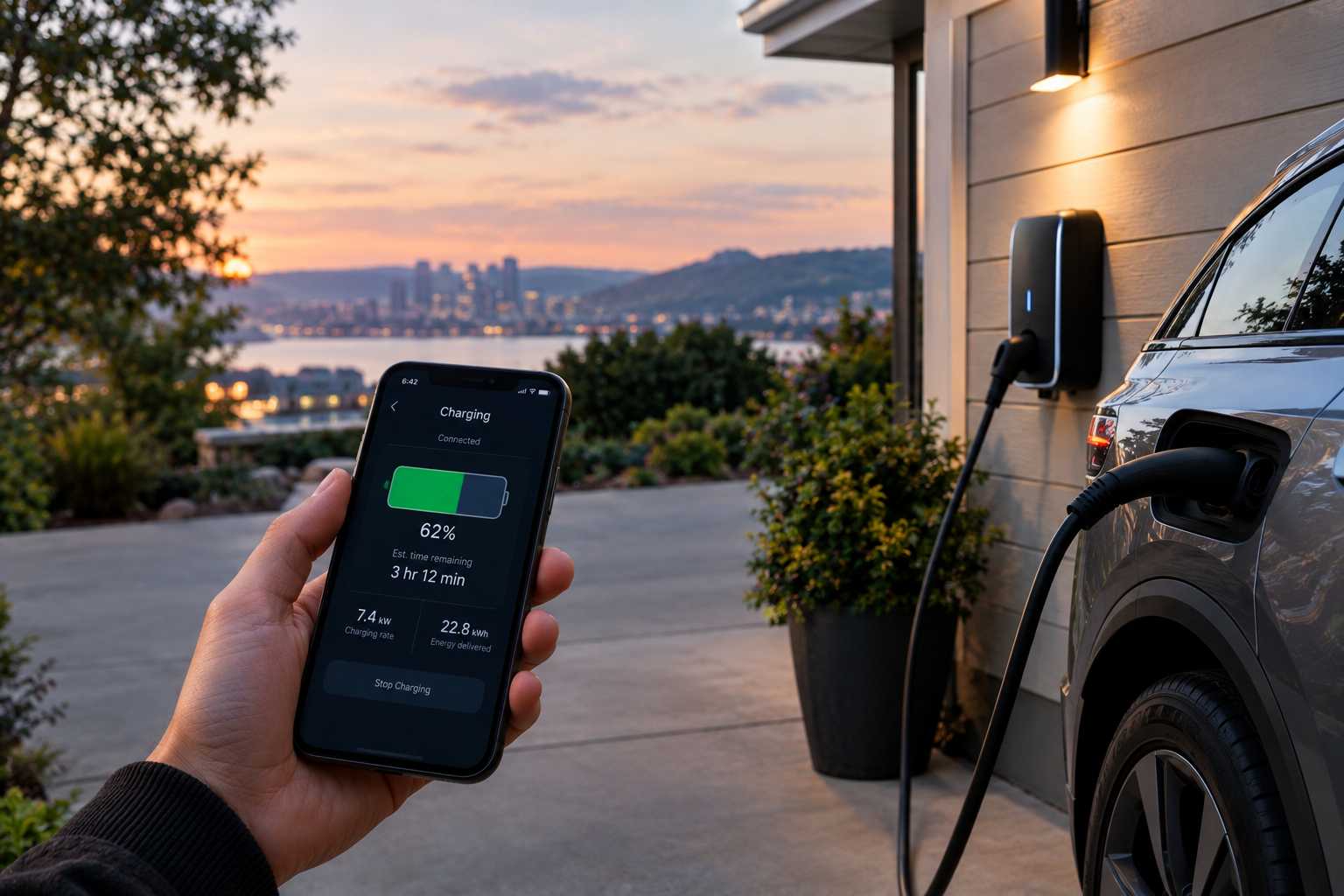
A Level 1 charger just plugs into a standard 120-volt outlet, the same kind used for most household appliances. No installation, no electrician, nothing extra needed beyond what typically comes with the car. The catch is speed. A Level 1 electric car charger adds roughly 3 to 5 miles of range per hour, which works fine for someone who barely drives but falls short for anyone trying to replace a full day’s commute overnight.
Level 1 electric vehicle charging stations are really just this same setup, sometimes marketed with slightly more features but functioning the same basic way. If your daily mileage is low and you have all night to charge, a level 1 charger might be all you ever need.
Most owners eventually move to Level 2 charging cost territory instead. This requires a dedicated 240-volt circuit, similar to an electric dryer outlet, and delivers 20 to 40 miles of range per hour. What is level 2 charging, in practical terms? It’s the difference between an 18-hour overnight charge and a 3-hour one. Level 2 charger installation cost and the cost to install EV charger at home more broadly both vary with your home’s electrical panel, distance from the panel to your parking spot, and whether any upgrades are needed. Tesla home charger installation and other EV home charger installation jobs generally fall in a similar range, since the electrical work involved doesn’t change much based on brand. A level 2 EV charger installation cost estimate from a licensed electrician is worth getting before you commit to a specific unit.
What is a level 2 charger worth to you specifically depends on your daily mileage. If you’re driving under 30 miles a day, Level 1 might genuinely be enough. Past that, the math starts favoring Level 2 pretty quickly.
Doing the Actual Math on Cost Per kWh.
Most EVs use somewhere between 25 and 35 kWh per 100 miles, depending on the model and driving conditions. To estimate your own cost to charge electric car expenses, multiply your monthly mileage by your car’s kWh-per-100-miles figure, then multiply by your electricity cost per kWh.
Take a driver covering 1,000 miles a month in a car using roughly 30 kWh per 100 miles. That’s 300 kWh of charging. Pennsylvania’s cost of electricity per kWh varies by utility and by your specific supplier, but landing somewhere in the 12 to 20 cent range for the supply portion is typical, before delivery charges are added. At that rate, monthly charging costs run somewhere between $36 and $60, though your utility’s specific Price to Compare and any EV-specific rate program you’re enrolled in can shift that meaningfully in either direction.
What Pennsylvania’s Utilities Actually Offer EV Owners?
This is where Pennsylvania looks genuinely different from other states, and it’s worth understanding utility by utility rather than assuming one setup applies everywhere.
Duquesne Light runs an actual EV Time-of-Use Supply Rate, approved by the Pennsylvania Public Utility Commission. According to Duquesne Light’s own program page, the rate splits the day into peak, off-peak, and super off-peak periods, with peak running from 3 p.m. to 9 p.m. Off-peak and super off-peak hours, covering overnight and weekends, always price lower than the standard default rate, while peak pricing always runs higher. Shifting your charging into those off-peak electricity hours is exactly what this rate structure is designed to reward.
PECO has run pilot programs focused mainly on public and commercial charging infrastructure, including reduced demand charges for DC fast charging stations, according to the Pennsylvania PUC’s own EV policy page. Residential EV-specific rate structures at PECO are less standardized than Duquesne Light’s, so it’s worth checking directly with PECO for whatever’s currently available in your area.
PPL Electric and other Pennsylvania utilities are also part of the state’s broader regulatory push toward EV-friendly time-of-use pricing, but program specifics and off peak energy hours vary by provider. The Pennsylvania PUC has been actively developing policy encouraging utilities statewide to offer time-of-use rates that price EV charging lower during off peak hours and higher during peak demand, so expect this landscape to keep evolving. Whatever utility serves you, setting up a home EV charging station with scheduling enabled is what actually lets you capture whatever off peak electricity hours your provider offers, rather than charging at random and missing the discount entirely.
If you want the broader mechanics of how TOU pricing works across utilities generally, not just for EVs, our full breakdown of time-of-use rates covers peak hours, off-peak hours, and how different providers structure them.
Remember Pennsylvania’s Price to Compare.
Every Pennsylvania utility publishes a Price to Compare, the default supply rate you pay if you don’t shop for a competitive supplier. This number updates quarterly and serves as your benchmark. If you’re adding a home EV charger and your electricity usage is about to jump meaningfully, it’s a good moment to check whether your current rate, utility default or competitive supplier, is actually the best one available for your new usage pattern.
Rebates Worth Checking Into!
Pennsylvania offers a state-level Alternative Fuel Vehicle rebate program, and some utilities have historically offered smaller EV driver rebates on top of that. Amounts and eligibility change over time, so rather than quoting a figure that may already be outdated, check directly with the Pennsylvania Department of Environmental Protection and your specific utility for what’s currently available before you assume a number.
A Quick Comparison.
Picture two Pittsburgh neighbors, both on Duquesne Light, both driving similar EVs. One charges whenever they get home, often right in the middle of peak hours. The other sets their charger to start at 11 p.m. and let it run into the super off-peak window overnight.
Over a full year, that second driver captures meaningfully lower rates on every single charging session, without changing how much they drive or which car they own. How much does it cost to charge an electric car for each of them, using identical vehicles? A noticeably different number, purely based on timing.
Is It Worth Shopping Your Electricity Rate Too?
Adding a home EV charger is exactly the kind of change that makes checking your electricity provider Pennsylvania options worthwhile. Your utility, PECO, PPL Electric, or Duquesne Light, still delivers the power no matter what. But the supply portion of your bill, the part an electric company Pennsylvania residents can shop around for, is where an outdated or uncompetitive rate quietly costs you more every month your EV is charging.
If you’ve never compared electricity rates Pennsylvania suppliers offer, adding a significant new electric load is as good a trigger as any to actually check. Our guide on fixed vs. variable electricity rates is worth reading before deciding which structure fits your new usage pattern.
And if you’re renting rather than owning, whether you can even make that switch depends on whose name is on the account, something we cover in detail in our guide on switching energy suppliers as a PA renter.
Compare Your Electricity Supply Options.
Adding an EV charger to your home is a real, lasting change to your electricity usage. Before you settle into a new routine, it’s worth checking whether your current supply rate still makes sense.
Compare electricity plans in Pennsylvania →
Frequently Asked Questions
1. How much does it cost to charge an electric car at home in Pennsylvania?
For a driver who travels around 1,000 miles per month, home EV charging in Pennsylvania typically costs about $35 to $75 per month. Your actual cost depends mainly on your electricity rate, your vehicle’s efficiency, and when you charge.
The biggest factors are:
- Electricity rate: Your cost per kWh varies by utility and electricity supplier.
- Vehicle efficiency: Most EVs use roughly 25 to 35 kWh per 100 miles.
- Monthly mileage: Driving more means using more electricity.
- Charging schedule: Off-peak charging can reduce your electricity cost if your utility offers time-of-use pricing.
For example, a vehicle using 30 kWh per 100 miles would need about 300 kWh to travel 1,000 miles. At 12–20 cents per kWh for the supply portion, that works out to roughly 36–60 before delivery charges.
2. What factors determine the cost of charging an EV at home?
There isn’t one fixed Pennsylvania EV charging cost because every driver’s situation is different. Your monthly bill depends primarily on how much electricity your car uses and what you pay for that electricity.
The calculation is essentially:
- Monthly miles driven
- × EV efficiency in kWh per 100 miles
- × electricity cost per kWh
- = estimated charging cost
Your utility and electricity supplier can also make a difference because Pennsylvania has different electricity rates and programs depending on where you live.
3. Is it cheaper to charge an electric car at home than at a public charging station?
This blog focuses specifically on home charging costs, so it does not establish a direct statewide price comparison with public charging stations.
What it does show is that home charging costs can be estimated from your electricity rate and vehicle efficiency. Pennsylvania drivers should also consider whether their utility offers off-peak or time-of-use pricing, since charging during lower-cost periods can reduce the supply portion of the electricity cost.
4. What is the difference between Level 1 and Level 2 EV charging at home?
The main difference is charging speed and installation requirements.
Level 1 charging:
- Uses a standard 120-volt household outlet.
- Generally requires no additional electrical installation.
- Adds roughly 3–5 miles of range per hour.
- Can work well for drivers with relatively low daily mileage.
Level 2 charging:
- Uses a dedicated 240-volt circuit.
- Typically requires electrical installation.
- Adds roughly 20–40 miles of range per hour.
- Can significantly reduce the time needed to recharge.
If you’re driving under about 30 miles per day, Level 1 may be sufficient. Drivers with higher daily mileage may find Level 2 more practical.
5. How much does it cost to install a Level 2 EV charger at home?
The blog does not give one fixed installation price because Level 2 installation costs vary from home to home.
Several factors can affect the cost, including:
- The condition and capacity of your electrical panel
- The distance between the electrical panel and parking location
- Whether electrical upgrades are necessary
- The specific installation requirements of your home
Getting an estimate from a licensed electrician is the best way to determine your actual installation cost before purchasing a charger.
6. When is the cheapest time to charge an EV in Pennsylvania?
That depends on your electricity provider and whether you are enrolled in a time-of-use rate.
For example, Duquesne Light offers an EV Time-of-Use Supply Rate with peak, off-peak, and super off-peak periods. Under that structure, peak hours are from 3 p.m. to 9 p.m., while off-peak and super off-peak periods are priced lower than the standard default rate.
For drivers with a time-of-use plan, scheduling the vehicle to charge during lower-cost periods can help reduce charging expenses without changing how many miles they drive.
7. Does Pennsylvania have special electricity rates for EV owners?
Some Pennsylvania utilities offer or are developing EV-related rate programs, but the options vary by utility.
The blog specifically highlights:
- Duquesne Light: Offers an EV Time-of-Use Supply Rate with peak, off-peak, and super off-peak pricing.
- PECO: Has focused EV-related programs primarily around public and commercial charging, while residential EV-specific rate structures are less standardized.
- PPL Electric and other utilities: Are part of Pennsylvania’s broader move toward EV-friendly time-of-use pricing.
Because programs can change, Pennsylvania EV owners should check their utility for the rates and programs currently available to them.
8. What is Pennsylvania’s Price to Compare, and why does it matter for EV owners?
Pennsylvania’s Price to Compare is the default electricity supply rate published by each utility. It provides a useful benchmark when you’re evaluating your current electricity supply rate.
This becomes particularly relevant when you add an EV because your household electricity consumption is likely to increase.
Before settling into a new charging routine, you can:
- Check your utility’s current Price to Compare.
- Look at the supply rate you’re currently paying.
- Compare available electricity supply options.
- Consider how your increased EV usage could affect your monthly bill.
The Price to Compare is updated quarterly, so it is worth checking the current figure rather than relying on an older rate.
9. Are there EV rebates available in Pennsylvania?
Pennsylvania has a state-level Alternative Fuel Vehicle rebate program, and some utilities have also historically offered smaller EV-related rebates.
However, rebate amounts and eligibility can change.
Before assuming that you qualify for a specific incentive, check:
- The Pennsylvania Department of Environmental Protection
- Your local electric utility
- The current eligibility requirements
- The current rebate amount
The blog intentionally does not give a fixed rebate figure because the available programs can change over time.
10. Can charging my EV at night lower my electricity bill?
It can, if your utility offers lower off-peak or super off-peak rates.
The important distinction is that simply charging at night does not automatically guarantee a lower rate. You need a rate structure that actually prices electricity differently based on the time of use.
If your utility offers time-of-use pricing, you can potentially save by:
- Scheduling your charger to begin during off-peak hours.
- Avoiding the utility’s peak charging period.
- Using the charger’s scheduling features to automate charging.
Duquesne Light’s EV time-of-use program is one example discussed in the article.
11. Should I switch electricity suppliers after buying an EV?
Adding an EV charger can be a good reason to review your electricity supply rate, because your household electricity consumption will increase.
However, whether switching makes sense depends on the rates and terms available to you.
Before making a change, consider:
- Your current supply rate
- Pennsylvania’s current Price to Compare
- Fixed versus variable rate structures
- How much electricity your EV is expected to add to your monthly usage
- Whether your current supplier has terms that fit your new usage pattern
The utility still delivers the electricity; the supply portion is the part Pennsylvania customers may be able to shop for.
12. Do renters in Pennsylvania have different options for EV charging?
They can, particularly when it comes to changing the electricity supply account or installing charging equipment.
If you’re renting, your ability to make changes can depend on:
- Who holds the electricity account
- Whether you are allowed to install charging equipment
- Whether the property has suitable electrical infrastructure
- What your landlord permits
The blog notes that renters should consider whose name is on the electricity account when looking at supplier changes.
13. How can I calculate my own monthly EV charging cost?
You can make a basic estimate using your monthly driving distance, your EV’s efficiency, and your electricity rate.
For example:
1,000 miles/month × 30 kWh/100 miles = 300 kWh/month
Then multiply the 300 kWh by your electricity cost per kWh.
At a supply rate of:
- 12¢/kWh → about $36
- 16¢/kWh → about $48
- 20¢/kWh → about $60
These figures represent the supply portion and do not include delivery charges. Your actual bill can therefore be different.
14. Is Level 2 charging worth installing if I don’t drive very much?
Not necessarily. The value of Level 2 depends heavily on your daily driving needs.
If you drive relatively little and have plenty of time to recharge overnight, Level 1 may be enough. It provides around 3–5 miles of range per hour without requiring a dedicated 240-volt circuit.
Level 2 becomes more useful when:
- Your daily mileage is higher.
- You need to recharge more quickly.
- Overnight Level 1 charging isn’t enough for your driving routine.
- You want the convenience of significantly faster home charging.
The decision is therefore less about the charger itself and more about how much you drive and how quickly you need the car ready again.
15. What is the biggest way Pennsylvania EV owners can reduce their home charging costs?
The most direct opportunity discussed in the blog is understanding your electricity rate and taking advantage of lower-cost charging periods when your utility offers them.
For Pennsylvania EV owners, that means:
- Know your utility’s current rate structure.
- Check whether an EV-specific or time-of-use rate is available.
- Identify the off-peak charging hours.
- Schedule your EV to charge during those periods.
- Review your electricity supply rate as your household usage increases.
You don’t necessarily need to drive less or change vehicles to reduce the cost. In some cases, simply changing when you charge can affect the electricity cost.