Most people have an idea of which appliances use the most electricity. The fridge runs all the time. The air conditioner works hard in the summer. The space heater feels like it’s burning a hole in your bank account in the winter.. Guessing isn’t the same as knowing. The difference between what you think and what’s actually happening is usually bigger than people expect. This guide breaks down the cost of running common household appliances based on typical use. You’ll see where your electricity money goes before your next bill arrives.
TL;DR
- Refrigerators, air conditioners and space heaters are usually the electricity users in a typical home even if people don’t expect it.
- The cost of any appliance depends on wattage hours used and your cost per kilowatt hour. You can use this to calculate the cost of anything in your home.
- A space heater can use as much electricity as several smaller appliances combined. Most models run near the maximum a standard outlet can handle.
- Dishwashers and washing machines cost less than people think. Most of their energy goes toward heating water, not the motor.
- Phantom load from devices left plugged in adds up across the home even when nothing is running.
- Energy efficient appliances with the ENERGY STAR label use less electricity to do the same job.
- Your monthly electricity cost comes from the combination of appliances used daily, not one device. That makes your electricity rate just as important as your usage habits.
Which Appliances Use the Electricity in a Typical Home?
A few appliances do most of the work when it comes to electricity bills.. They’re not always the ones people think they are.
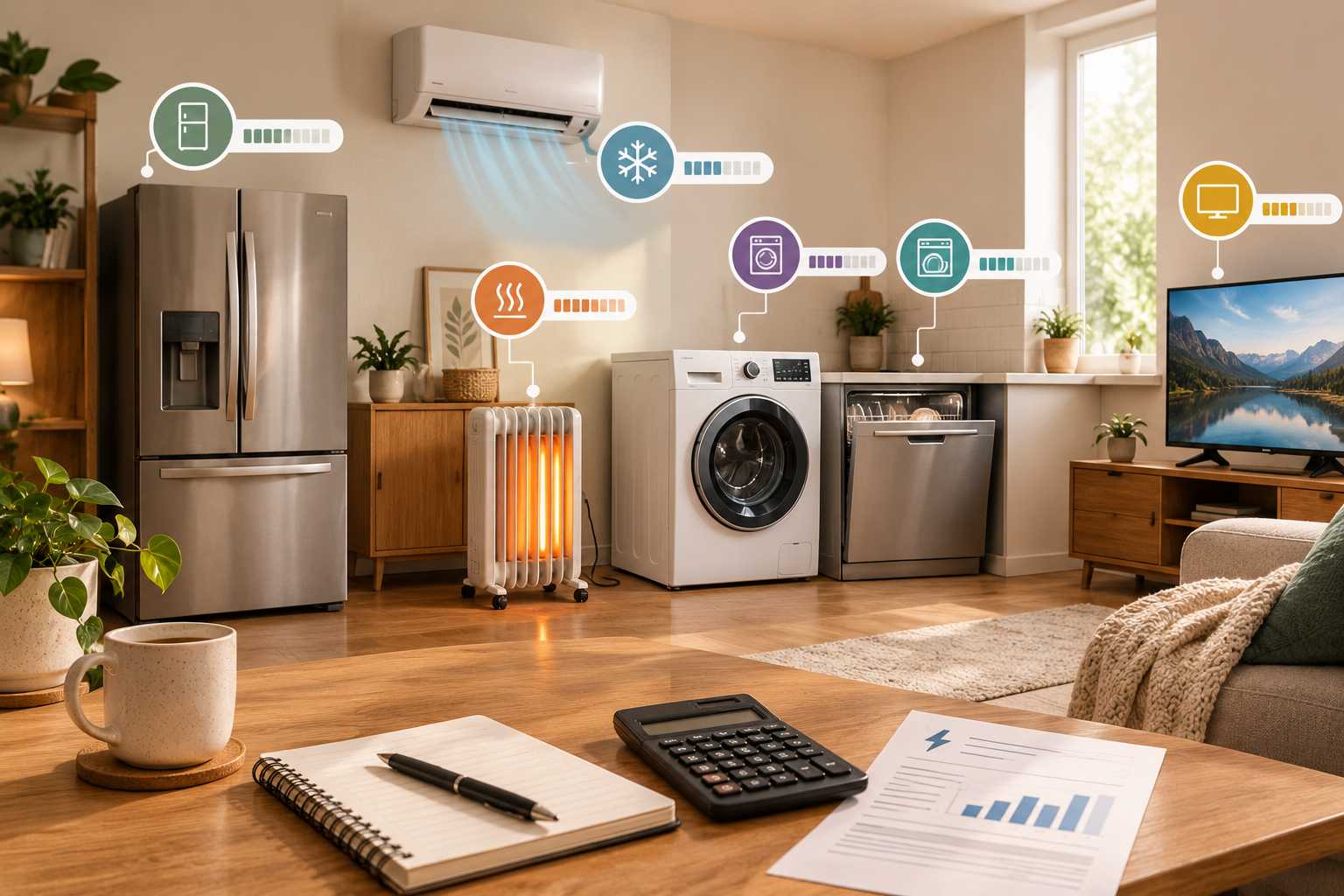
Refrigerators run all day every day. That adds up even though the amount of power they use at any one time is low. Air conditioners use a lot of electricity when they’re on central systems that cool the whole house. Space heaters are small. They’re expensive to run. They can pull as much power as several other appliances combined just to heat one room. Washing machines and dishwashers don’t use electricity directly. Most of their cost comes from heating water, not the motor. Televisions fall somewhere in the middle. Modern LED models use less than older ones.
Knowing which appliances matter most in your home depends on how you use them and how long they stay on. That’s what the next section explains.
How to Figure Out What an Appliance Actually Costs You?
The cost of running an appliance comes down to three things: wattage hours used and your cost per kilowatt hour.
Take the wattage of the appliance, multiply it by how many hours it runs, divide by 1,000 to get kilowatt hours then multiply by your rate per kilowatt hour. The U.S. Department of Energy has a guide that walks you through this math if you want to calculate the cost of something not covered here.
Your cost per kilowatt hour matters more than most people realize. If you’re paying a rate your electricity bill will be higher even if your appliances use the same amount of power. Comparing your rate with others, including suppliers like Constellation or Direct Energy is a good first step. It’s better than blaming the appliance if the real issue’s your electricity rate.
Average Cost of Electricity for Major Home Appliances
Here’s how the common appliances stack up using average usage and a mid-range electricity rate.
Refrigerator.
A modern refrigerator doesn’t run constantly. It cycles on and off. That means the cost per hour is low. Because it never shuts off completely the yearly cost adds up. In fact it often ends up costing more than any appliance you use occasionally.
Air conditioner.
Central air conditioning is one of the electricity users in a home. A single summer month of use can cost several times more than a light use in spring or fall. The reason? It runs for hours each day during heat waves.
Space heater.
A space heater uses a lot of power for its size. Most portable models draw close to the maximum a standard outlet can handle. Running one for hours a day in winter can cost as much as or more than your central heating system for that room. The total cost depends on how many hours it runs. The wattage stays much the same across most models.
Dishwasher.
Most of the energy in a dishwasher goes to heating water, not running the motor. A dishwasher used a day usually costs less per month than people expect, especially with an energy efficient model that uses less hot water per cycle.
Washing machine.
Like a dishwasher, a washing machine’s energy use depends on water temperature. Cold water cycles cost a fraction of what hot water cycles do. That’s because heating water is where most of the energy goes.
Television.
A modern TV, especially LED or LCD models, is one of the appliances that runs per hour. Older plasma screens or large screens left on for hours can add a noticeable amount to your bill. Still it’s usually modest.
The Hidden Cost of Phantom Load and Standby Power
Not all electricity use comes from appliances that are actively running. Phantom load, also called power, is the electricity devices pull even when they’re turned off but still plugged in.
Game consoles, cable boxes, phone chargers and many kitchen appliances with a clock or digital display all draw an amount of power. It’s not much at glance. But spread across a house of plugged-in devices this standby power adds up.
You might not notice it.. Over time it becomes a real part of your monthly bill. A simple fix? Unplug devices you don’t use often.. Use a power strip you can switch off completely. That’s one of the ways to reduce your electricity bill without changing how you live.
Energy Efficient Appliances and the ENERGY STAR Difference.
Not all appliances that do the job use the same amount of electricity. Energy efficient models with the ENERGY STAR label are built to use less power for the same performance. The savings add up every time you use them.
For example a new ENERGY STAR refrigerator uses less electricity than an older model. The same goes for dishwashers, washing machines and air conditioners. Energy efficient appliances make a difference.
Lighting matters too. LED bulbs use less electricity than incandescent bulbs. They give the brightness with a fraction of the power. They also last longer.
If you’re thinking about an upgrade like switching to a heat pump our guide on heat pump costs and whether the switch is worth it shows how the savings can add up over time.
What This Means for Your Average Monthly Electricity Cost?
Put it all. The refrigerator, air conditioner, space heater in winter, a dishwasher and washer used a times a week, a television on most evenings and the phantom power from all the plugged-in devices. That’s where your average monthly electricity cost really comes from.
It’s not usually one appliance. It’s the combination of running every day all month long.
That’s also where your electricity rate becomes just as important as your habits. Two homes using the appliances at the same time can have very different bills. One might pay more because their rate per kilowatt hour is higher.
Once you know where your usage comes from, check your rate. See how your current plan compares to others. Look at what City Power and Gas plans offer. When you’re ready, explore new electricity supply plans to see if a better rate is available for your home.
FAQs
Which appliances use the most electricity in a typical home?
Three appliances usually top the list:
- Refrigerators, since they run constantly
- Air conditioners, which draw heavy power in summer
- Space heaters, which use near-max outlet wattage
Dishwashers, washing machines, and TVs cost far less per month. The difference comes down to daily run time.
How much electricity does a space heater use, and does it really cost that much?
Yes, a space heater uses a lot of electricity for its size.
- Most models draw 1,200 to 1,500 watts
- That’s close to a standard outlet’s limit
Running one for several hours daily in winter can cost as much as central heating for that same room.
What’s the actual cost of running a refrigerator all month?
The cost of running a refrigerator is lower per hour than people assume.
- The compressor cycles on and off, not constantly
- It never fully shuts down, though
Because of that, a refrigerator’s yearly total usually outweighs any appliance you only use occasionally, like a dishwasher.
Do dishwashers and washing machines use a lot of electricity?
Not as much as people expect.
- Most of the cost comes from heating water, not the motor
- A cold-water cycle costs a fraction of a hot-water one
Running either appliance once a day typically adds only a modest amount to your bill, not a major spike.
What is phantom load, and should I actually worry about it?
Phantom load, or standby power, is electricity devices draw while off but still plugged in.
- Think cable boxes, chargers, game consoles
Individually it’s tiny, but across a whole house running nonstop, it adds a real, often overlooked amount to your yearly electricity cost every month.
Do energy efficient appliances actually save meaningful money?
Yes, and the savings compound over time.
- ENERGY STAR appliances do the same job using less electricity
- Energy efficient kitchen appliances and LED lamps use noticeably less power than older models
That difference adds up across dozens of uses every month, worth checking before you replace anything.
How do I know my actual cost per kilowatt hour?
Check a recent electric bill.
- Your cost per kilowatt hour is usually listed as the supply rate
- It’s separate from delivery charges
The average cost per kilowatt hour varies by state and season, so comparing your rate against other suppliers shows if you’re overpaying each month.
Why is my average cost of electricity per month higher than a neighbor’s with similar appliances?
Appliance usage is only half the equation.
- Two homes running identical appliances can still land on different bills
- The gap usually comes down to cost per kilowatt hour
Checking your supply rate against current options is often the fastest way to close that gap for your household.