

Your gas bill jumps every January and it’s not really a mystery why. The usual fix people reach for, crank the thermostat down and bundle up, works, but it’s also the least satisfying answer out there. If you actually want to know how to save energy this winter without sitting in a cold living room, the real wins are somewhere else. They’re in where the heat is leaking out, not in how much you’re willing to suffer through it.
So let’s start with the obvious question first.
TL;DR
- Why is my gas bill so high in the winter almost always comes down to furnace runtime, not a sudden drop in efficiency, since the furnace just runs longer to fight colder outdoor air.
- The best temperature to set your thermostat in winter to save money is the high 60s while you’re home, with a deeper setback while you’re asleep or away.
- A smart thermostat automates the setback habit most people mean to do manually and never actually keep up.
- Home insulation and wall insulation are often the real reason a well-run furnace still can’t keep the bill down, especially in older homes.
- Furnace maintenance, starting with a clean filter and an annual tune-up, keeps the system running at the efficiency it was built for.
- An aging furnace that needs constant repairs may cost more over time than furnace installation with a newer, ENERGY STAR certified model.
- How to reduce your gas bill this winter is about stacking a few of these fixes together, not relying on one, and none of it means living in a cold house
Why Is My Gas Bill So High in the Winter?
You open the bill in January and think, why is my gas bill so high compared to October? Almost always it’s runtime. Your furnace doesn’t burn gas faster in January. It just runs a lot longer, hour after hour, trying to hold the line against the cold outside.
A mild October day might only need the furnace on for a couple hours total. A stretch of real winter cold can have it running most of the day and all night. That’s the whole story behind why is my gas bill so high in the winter, nine times out of ten. Nothing broke. Your house is just losing heat faster than it can replace it, and the furnace is working overtime to keep up.
How to Save Energy Without Freezing?
Here’s the thing about how to save energy on heating: it’s rarely about toughing it out. The best ways to save money on a gas bill come from fixing waste, not from lowering your standards for what “warm” means.
Three things drive most of a winter gas bill. Your thermostat habits. Gaps in your insulation. And how well your furnace is actually running. Get those three dialed in and the bill drops while the house stays just as warm.
Best Temperature to set Thermostat in Winter to Save Money
People keep their thermostat higher than they need to, mostly out of habit. The best temperature to set your thermostat in winter to save money sits in the high 60s while you’re home and awake, then drops further while you’re asleep or out. The Department of Energy’s thermostat guidance backs this up, and it matches what most HVAC techs will tell you anyway: setting back the temperature for several hours a day adds up to real savings over a season, without you noticing much while you’re actually sitting in the room.
There’s a myth that leaving the thermostat at one constant number saves gas because the furnace “works harder” to recover from a setback. It doesn’t work that way. A house loses heat more slowly once it’s already below its normal temperature. The setback approach wins either way.
Smart Thermostats and Other Easy Wins
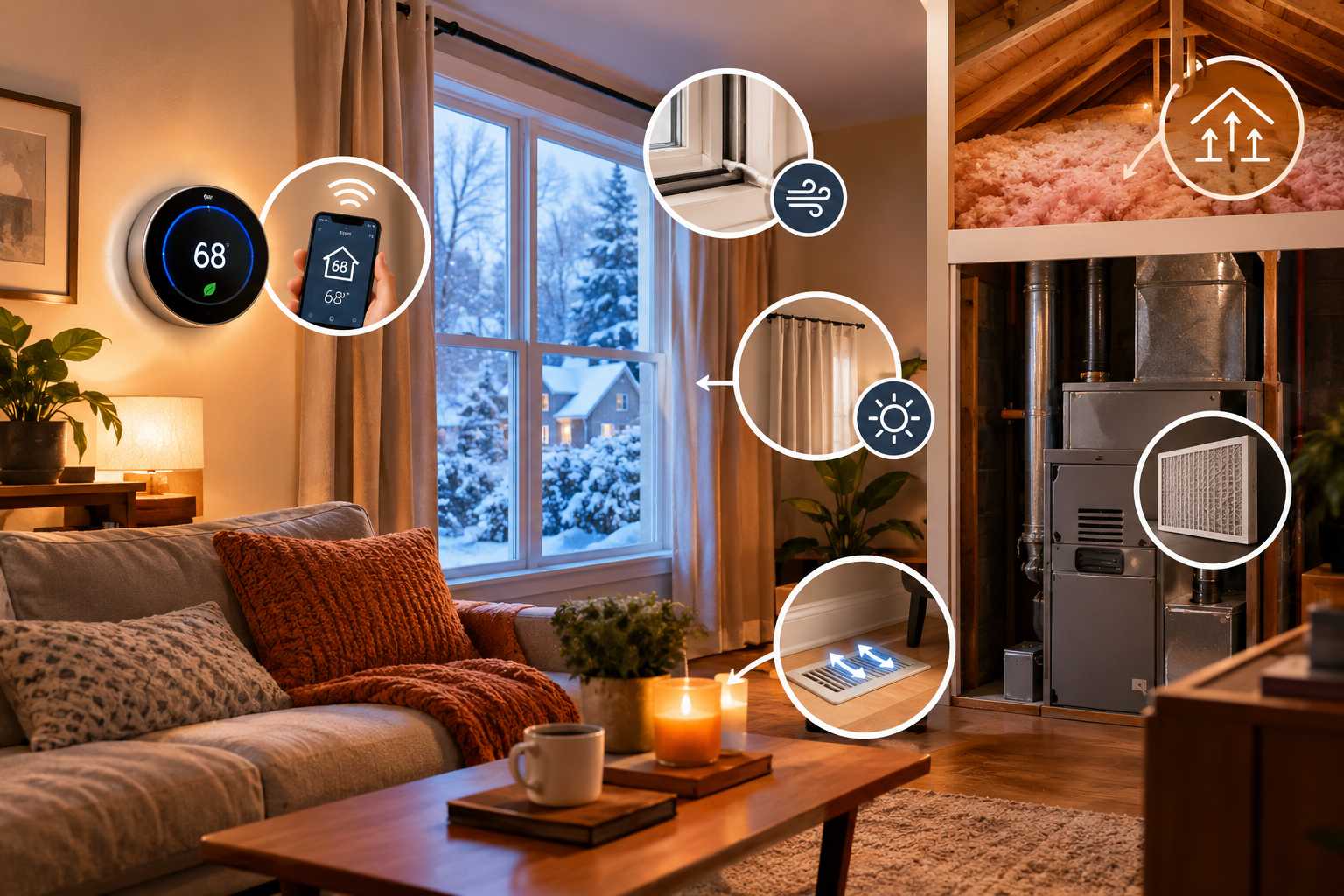
A smart thermostat takes the remembering out of it. You stop having to manually knock the temperature down every time you leave for work or head to bed, because it learns your schedule and does it for you. For anyone who’s owned a programmable thermostat and never actually programmed it, that automation is the difference between an idea and an actual habit.
Beyond the thermostat, a handful of small heaters energy saver habits do real work over a winter. Seal the obvious drafts around doors and windows. Close the curtains once it’s dark out, since that alone holds in a surprising amount of warmth. Keep furniture off your vents so the heated air actually makes it into the room. None of this touches your furnace, and together it still takes a real bite out of how hard the system has to work.
Where Home Insulation and Wall Insulation Actually Matter?
If your thermostat’s set right and your furnace is running fine and the bill is still high, insulation is usually next on the list. Home insulation in the attic especially, since warm air rises and a thin or patchy attic is basically an open door for heat to escape.
Wall insulation matters too, just less dramatically, and it shows up more in older homes built before current energy efficiency standards existed. The Department of Energy’s home insulation guide is worth a look if you want to check your current R-value against what makes sense for your climate before deciding whether it’s worth adding more. A poorly insulated house needs more furnace runtime no matter how good that furnace is. You can’t insulate your way out of a bad furnace, and you can’t out-furnace a leaky attic either.
When the Problem Is the Furnace, Not the Habits?
Sometimes none of the above is the issue. It’s just the furnace. An older unit that hasn’t been serviced in a while loses efficiency slowly, quietly, and burns more gas to put out the same heat it used to. Even something as simple as a dirty filter can force it to work harder than it should, and that’s worth checking before assuming anything bigger is wrong.
If repairs are starting to feel constant, furnace installation with a newer, ENERGY STAR certified model is worth pricing out. ENERGY STAR certified furnaces run at meaningfully higher efficiency than standard units, and depending on how old your current one is, the gas savings over a few winters can offset a real chunk of the upfront cost. A licensed HVAC technician can tell you honestly whether your furnace still has good years left or whether it’s quietly costing you more every winter than replacing it would.
Thinking about moving away from gas heat entirely instead of just patching the current system? Our breakdown of heat pump costs and whether the switch pays off covers that comparison.
Putting It All Together
So, how do I reduce my gas bill without just gritting my teeth through February? You combine the small stuff with the bigger fixes. How to reduce gas bill costs usually comes down to a short, boring list: set the thermostat a few degrees lower with real setbacks, check and swap the furnace filter, seal the obvious drafts, confirm the attic insulation is actually doing its job, and get the furnace serviced once a year.
How to reduce your gas bill isn’t about picking one of these and calling it done. Most households see the real savings when they stack two or three of these together instead of treating any single fix like a silver bullet. If you want more everyday habits that lower a monthly bill, not just a heating one, our guide on simple ways to cut your electric bill covers similar ground on the electric side.
None of this means freezing through winter. A well-insulated house with a furnace that’s actually been serviced and a thermostat on a sensible schedule stays just as warm as one running wide open and wasteful. It just costs less to get there.
Wondering if your supply rate is part of the problem too? See how City Power and Gas plans compare, and when you’re ready, check current plans for your home before next month’s bill shows up.
FAQs
Why is my gas bill so high in the winter even though I haven’t changed anything?
Usually nothing’s actually broken.
- Your furnace runs longer hours, not hotter
- Colder outdoor air just widens the gap it’s fighting
That extra runtime is almost always the real answer behind why is my gas bill so high in the winter, not a sudden efficiency drop, every season.
What’s the best temperature to set my thermostat in winter to save money?
High 60s while you’re home is the sweet spot.
- Drop it further while you’re asleep
- Drop it again when no one’s home
Each setback adds up over a season. A house actually loses heat slower than people assume once it’s already below its normal temperature.
Is a smart thermostat actually worth it, or just a gadget?
For most households, worth it.
- It handles the setback schedule automatically
- No remembering required, which is exactly where manual schedules usually fail
If you’ve ever owned a programmable thermostat and never once programmed it, a smart one closes that gap without you having to try.
Will adding home insulation actually lower my gas bill, or is that overhyped?
Depends on where the gaps actually are.
- Attic insulation matters most, since heat rises and escapes through the roof
- Wall insulation helps too, especially in older homes
A furnace can only do so much when the house is quietly leaking heat out the top the whole time.
How do I know if my furnace needs maintenance or a full replacement?
Start with the cheap stuff first.
- A dirty filter alone can force it to work harder
- Frequent repairs on an older unit are the real red flag
A licensed HVAC technician can tell you honestly whether it’s got good years left, or whether furnace installation makes more sense financially.
What are some heaters energy saver habits that don’t cost anything?
A few cost nothing but attention.
- Seal obvious drafts around doors and windows
- Close curtains once it’s dark to hold in warmth
- Keep furniture off vents so heat reaches the room
None of this touches the furnace itself, but together it noticeably cuts how hard the system has to run.
How do I reduce my gas bill without living in a cold house all winter?
Combine a few fixes instead of picking just one.
- Lower the thermostat with real scheduled setbacks
- Check the filter and seal drafts
- Confirm the attic insulation is doing its job
Most households see the real savings when they stack two or three of these, not when they lean on a single fix.
Does furnace installation with a newer model actually pay for itself?
Often, yes, depending on the age of what it’s replacing.
- ENERGY STAR certified furnaces run at meaningfully higher efficiency
- Gas savings build up across multiple winters
It won’t offset the upfront cost overnight, but on an aging, repair-prone furnace, the math usually works out within a few years.


