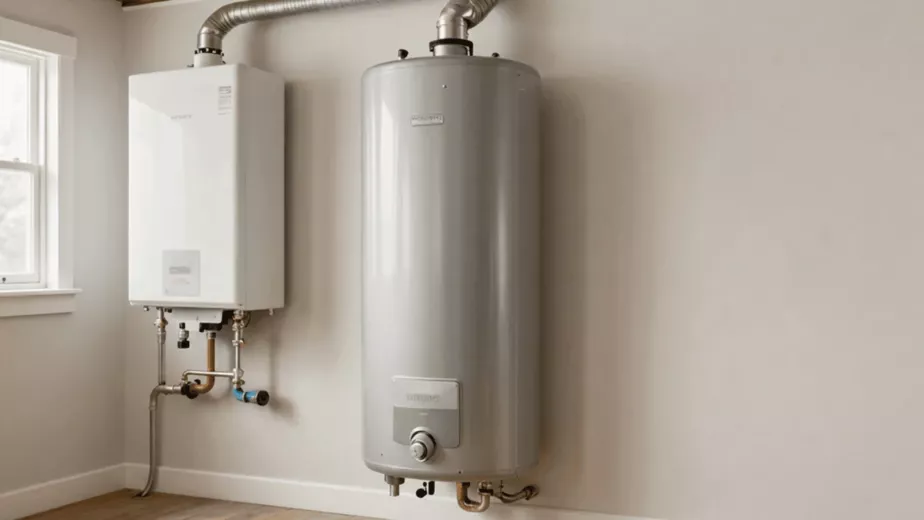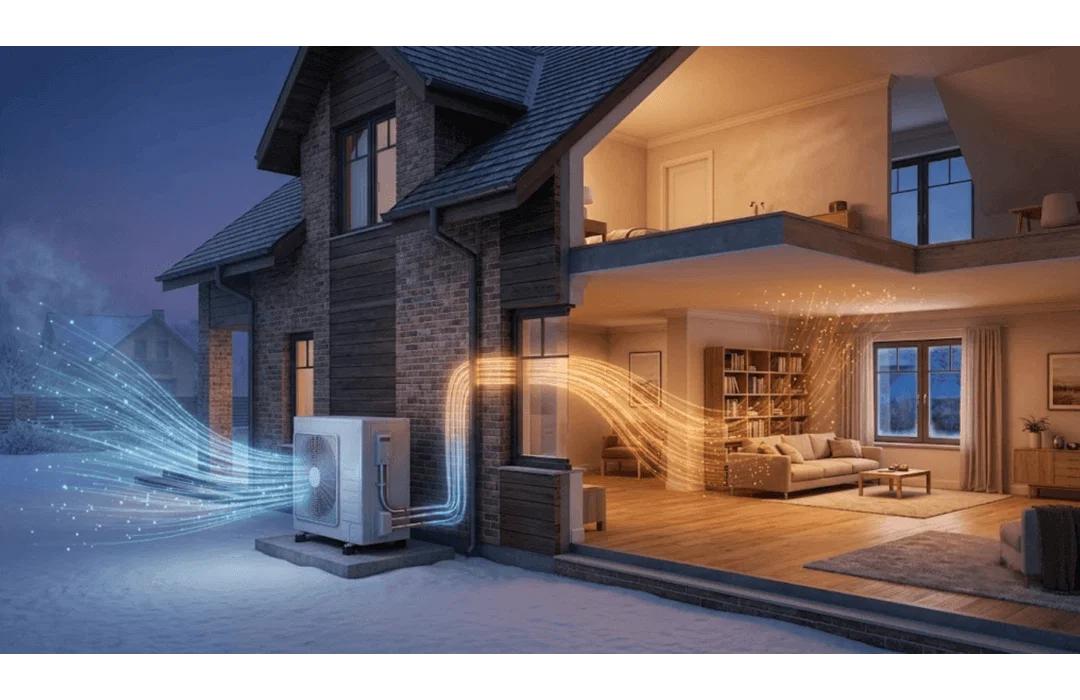
If your furnace is aging out or your central AC needs replacing, there’s a decent chance a contractor has already brought up heat pumps. So what is a heat pump, exactly? In short, it’s a single system that both heats and cools your home by moving heat rather than burning fuel to create it. That one distinction is why heat pumps have become one of the most talked-about upgrades in home heating and cooling over the past few years.
This guide breaks down what a heat pump is, how it actually works, the different types available, what installation typically costs, and how a heat pump affects the electricity side of your bill, since that’s the part most explainers skip.
TL;DR
- A heat pump is a single system that both heats and cools a home by moving heat rather than burning fuel to create it.
- Main types include air source (ducted), ductless mini-split, and geothermal, each suited to different homes, budgets, and climates.
- Heat pump installation cost varies by system type, with geothermal carrying the highest upfront price due to the ground loop involved.
- A furnace burns fuel directly, while a heat pump moves existing heat, that’s the core difference that shapes cost, performance, and climate suitability.
- Annual heat pump maintenance, filter checks, refrigerant levels, and clearing the outdoor unit, helps prevent the most common repair issues.
- New York homeowners may qualify for rebates through the NYS Clean Heat program, run jointly by NYSERDA and utilities like National Grid and Con Edison.
- Since a heat pump runs entirely on electricity, it shifts more of your home’s energy use onto your electric bill, making your electricity supply rate worth a fresh look.
- City Power and Gas doesn’t sell, install, or repair heat pumps, but helps compare electricity supply plans once that usage shift happens.
How Does a Heat Pump Work?
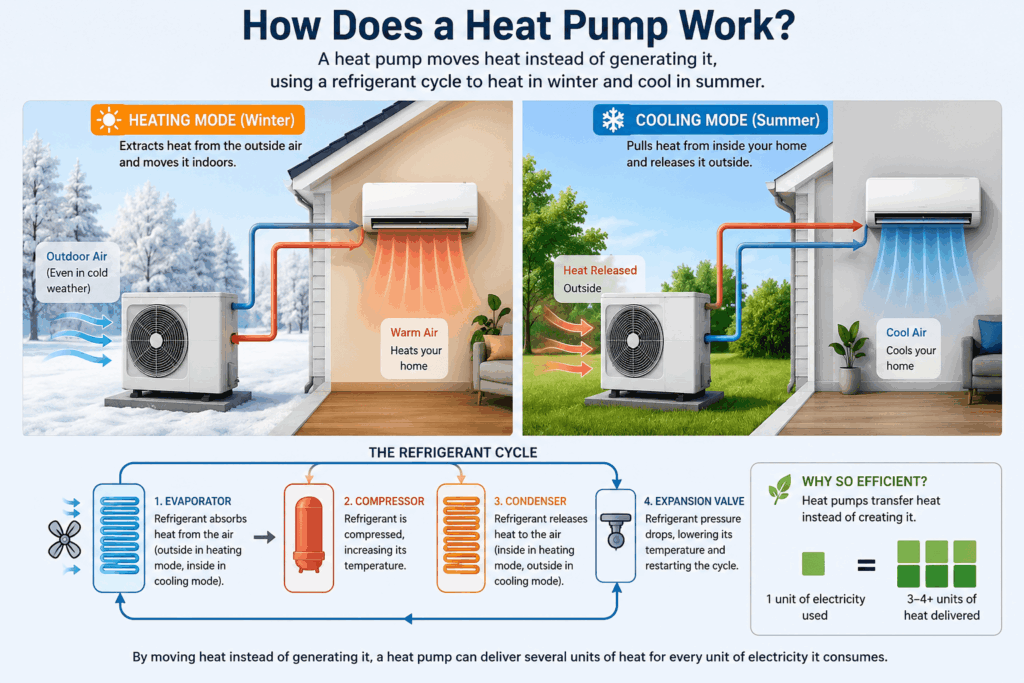
A heat pump doesn’t generate heat the way a furnace or boiler does. Instead, it moves heat from one place to another using a refrigerant cycle, the same basic principle your refrigerator uses, just in reverse when needed.
In heating mode, a heat pump extracts heat from the outside air (yes, even when it’s cold out) and moves it indoors. In cooling mode, it runs the opposite direction, pulling heat out of your home and releasing it outside, functioning just like a standard air conditioner. Because it’s transferring heat rather than creating it through combustion, a heat pump can deliver several units of heat for every unit of electricity it consumes, which is why efficiency numbers for heat pumps tend to look so different from a traditional furnace.
ENERGY STAR’s own explainer walks through this refrigerant cycle in more detail if you want the deeper mechanical breakdown.
Types of Heat Pumps
Not every heat pump system works the same way. The type that fits your home depends on your existing ductwork, climate, and budget.
Air source heat pump (ASHP):
The most common residential option. It exchanges heat with the outside air and typically connects to existing ductwork, similar to a central AC system.
Ductless heat pump (mini-split):
A version of the air source heat pump built for homes without ductwork. Instead of running air through vents, it uses one or more wall-mounted indoor units connected to an outdoor compressor.
Geothermal heat pump:
Also called a ground source heat pump, this type exchanges heat with the ground or a nearby water source instead of the outside air. It’s more expensive to install but tends to run more efficiently year-round, since underground temperatures stay far more stable than outdoor air temperatures. ENERGY STAR’s geothermal page has more detail on how these systems are built.
Heat pump water heater:
A smaller-scale application of the same technology, used specifically to heat water rather than air. These use a fraction of the electricity a standard electric resistance water heater does.
Air-to-air heat pump systems:
A broader category that covers most standard air source setups, moving heat between indoor and outdoor air rather than using ground loops or water.
Heat Pump vs Furnace: What’s Actually Different
This is the comparison most homeowners are really trying to make. A furnace burns fuel, gas, oil, or propane, to generate heat directly. A heat pump moves existing heat instead, which is a fundamentally different process with different trade-offs.
A furnace tends to produce hotter air at the vent and can outperform a standard heat pump in extremely cold climates, though modern cold-climate heat pump models have narrowed that gap significantly. A heat pump, on the other hand, handles both heating and cooling in a single system, which a furnace can’t do on its own.
If you’re weighing this decision for your own home, our breakdowns of gas vs. electric heating and electric vs. gas heating go deeper into the cost and performance differences between fuel-based systems and electric options like heat pumps.
Heat Pump Installation Cost
Heat pump installation cost varies significantly based on system type, home size, and whether existing ductwork can be reused. Ducted air source systems tend to fall in the middle of the range, ductless mini-splits often run higher due to the equipment involved, and geothermal systems carry the highest upfront cost of any heat pump type because of the ground loop installation.
Brands like Carrier, Lennox, and Mitsubishi all manufacture residential heat pump systems, and pricing varies by brand, efficiency rating, and capacity. EnergySage’s heat pump cost breakdown is a useful resource if you want current, itemized pricing across system types before getting quotes from local contractors.
Heat Pump Repair and Maintenance
Like any HVAC system, a heat pump needs regular maintenance to keep running efficiently. Annual heat pump maintenance typically includes cleaning or replacing filters, checking refrigerant levels, and inspecting the outdoor unit for debris or ice buildup.
When it comes to heat pump repair, common issues include refrigerant leaks, a frozen outdoor coil, or reduced airflow from a clogged filter. Most manufacturers recommend having a licensed HVAC technician service the system at least once a year, ideally before the heating and cooling seasons hit their peak demand.
Heat Pump Rebates in New York
If you’re in New York, heat pump installations may qualify for rebates through the state’s NYS Clean Heat program, run jointly by NYSERDA and participating utilities including National Grid and Con Edison. Rebate amounts depend on your specific utility, system type, and household income, so it’s worth checking eligibility directly before budgeting for installation.
How a Heat Pump Affects Your Electric Bill
Since a heat pump runs entirely on electricity, switching to one usually means a real shift in your electric usage, even as it may lower or eliminate a separate gas or oil bill entirely. That shift is worth planning for, since it changes how much your electricity supply rate actually matters to your overall energy costs.
This is where the two sides of your energy bill come into play. Your utility, National Grid or Con Edison depending on your area, delivers the electricity a heat pump runs on. Separately, you choose who supplies that electricity, and that’s the part of your bill that can actually be shopped around.
If your household is adding meaningful electric load from a new heat pump, this is a good moment to review your current setup. Our guide on home energy audits is a useful starting point for understanding where your overall usage stands, and our breakdown of fixed vs. variable energy rates can help you decide which type of supply plan makes sense once that usage shifts toward more electricity and less fuel.
Compare Your Electricity Supply Options
City Power and Gas doesn’t sell, install, or repair heat pumps, that part of the process runs through a licensed HVAC contractor. What we do help with is the electricity supply side of your bill, which becomes more relevant the moment a heat pump adds real electric load to your home.
Whether you’re planning a heat pump installation or already running one, comparing a fixed or variable electricity supply plan can help you manage the cost shift that comes with it.
Compare electricity plans now →
The Bottom Line
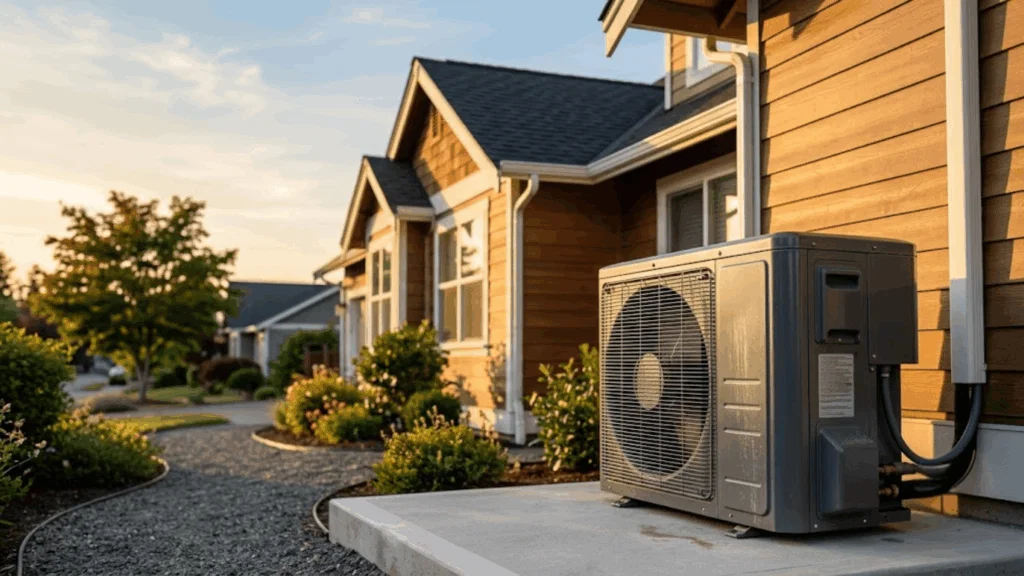
A heat pump is a single system that both heats and cools a home by moving heat rather than burning fuel, and that mechanical difference is what separates it from a traditional furnace or boiler. Air source, ductless, and geothermal heat pumps each fit different homes and budgets, and installation costs vary accordingly, though rebate programs like NYS Clean Heat can meaningfully offset that upfront cost for eligible New York households.
Since a heat pump shifts more of your home’s energy use onto electricity, it’s worth taking a fresh look at your electricity supply rate once you’re running one, that’s the piece of the equation most heat pump guides leave out entirely.
FAQ’s
What is the major disadvantage of a heat pump?
The biggest drawback is upfront installation cost, which typically runs higher than a standard furnace. Some older heat pump models also lose efficiency in extreme cold, though modern cold-climate systems have largely closed that gap for most northern climates including New York and Pennsylvania.
How much does it cost to install a heat pump in a 2,000 square foot house?
Costs vary by system type, home layout, and local labor rates. Ducted systems tend to fall in the middle of the range, ductless setups often cost more, and geothermal systems carry the highest price due to the ground loop installation involved.
Which is better, a heat pump or an AC?
It depends on what you need. A standard AC only cools. A heat pump cools in summer and heats in winter using the same unit, which makes it the better choice if you’re replacing both systems at once rather than just one.
What is the most common problem with heat pumps?
Reduced airflow from a dirty filter is the most frequent issue, often mistaken for a bigger problem. Refrigerant leaks and a frozen outdoor coil are also common. Most issues are preventable with the annual maintenance visit most manufacturers recommend.
Why is my electric bill higher after installing a heat pump?
A heat pump runs entirely on electricity, so if it replaced a gas or oil system, some of that cost simply shifted to your electric bill instead of disappearing. Reviewing your electricity supply rate afterward often uncovers real savings.
What is the typical lifespan of a heat pump?
Most residential heat pumps last 12 to 15 years with regular maintenance, similar to a central air conditioner. Geothermal systems tend to last significantly longer since the underground components experience far less wear than an outdoor compressor unit.
Can a heat pump handle very hot or very cold weather?
Yes, within reason. Standard heat pumps cool effectively even in extreme summer heat. Cold-climate models are specifically built to keep heating efficiently well below freezing, which is why system selection matters more in colder regions like the Northeast.
Is it cheaper to run a gas furnace or a heat pump?
It depends on local electricity and gas prices, plus your climate. In many cases, a heat pump costs less to operate than a furnace, especially in moderate climates, since it moves heat rather than burning fuel to generate it.
Can I replace my central air conditioner with a heat pump?
Often, yes. A heat pump can frequently use the same ductwork as your existing central AC, since both systems move air through similar components. A licensed HVAC contractor can confirm compatibility with your current setup before installation.
Is it okay for a heat pump to run continuously in winter?
Yes. Unlike a furnace that cycles on and off, heat pumps are designed to run for longer stretches at lower output during cold weather. That steady operation is normal and is actually part of how they stay efficient.