
Choosing between prepaid vs postpaid electricity isn’t simply about when you pay your electricity bill. The right option depends on how you manage your household budget, your electricity usage, and the level of flexibility you want from your energy plan U.S. residential electricity prices. While some households prefer paying for electricity in advance to better control spending, others value the convenience and predictability of receiving one monthly bill after they’ve used the electricity.
Understanding how each billing option works can help you avoid unnecessary costs and choose a plan that aligns with your financial habits. In competitive electricity markets, it’s also worth looking beyond payment methods and comparing available electricity suppliers, plan types, and pricing options. City Power and Gas encourages consumers to make informed decisions by comparing electricity plans based on overall value, not just how or when payments are made.
TL;DR
- Prepaid electricity lets you pay for electricity before you use it, helping you monitor spending in near real time.
- Postpaid electricity allows you to use electricity first and pay through a monthly bill at the end of the billing cycle.
- Prepaid plans often have fewer upfront requirements, while postpaid plans may offer greater billing convenience.
- Neither option is automatically cheaper, the total cost depends on electricity rates, household energy usage, and plan terms.
- Before choosing a plan, compare pricing, contract options, and available electricity suppliers to find the best fit for your home.
What Is the Difference Between Prepaid and Postpaid Electricity?
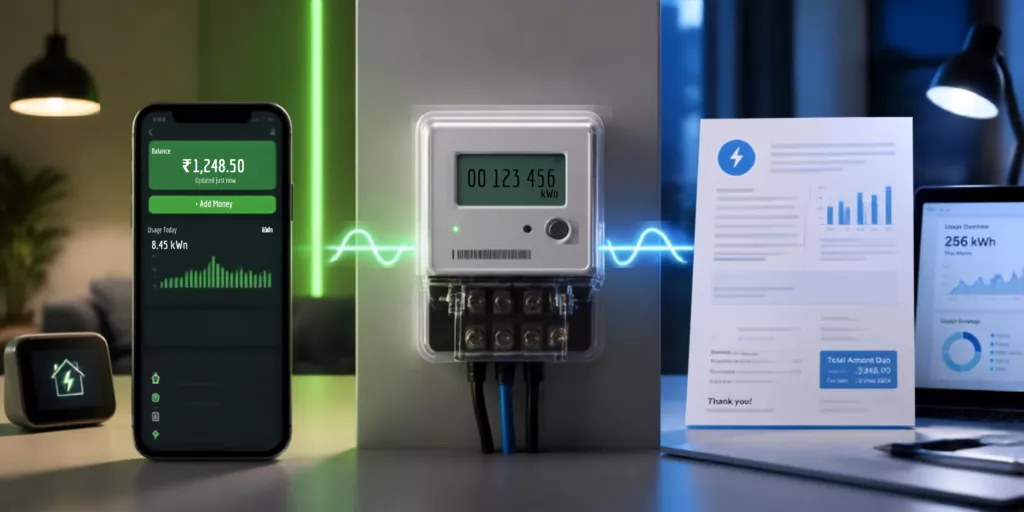
The biggest difference between prepaid vs postpaid electricity is when you pay for your electricity.
- Prepaid electricity: You pay before using electricity by adding money to your account.
- Postpaid electricity: You use electricity first and pay afterward through a monthly bill.
Although the payment process is different, both options deliver electricity through your local utility’s power grid. The real difference lies in how you manage your payments, track energy usage, and control your monthly electricity expenses.
What Is Prepaid Electricity?
Prepaid electricity, often called pay as you go electricity lets you pay for electricity before you use it. Instead of receiving a monthly bill, you add funds to your account, and your electricity costs are deducted as your home consumes energy.
Most prepaid plans use smart meters to measure electricity usage in near real time. This allows you to:
- Monitor your electricity consumption as it happens.
- Receive low-balance alerts by text, email, or mobile app.
- Add funds before your balance runs out.
- Better manage your monthly energy budget.
Because many prepaid plans don’t require a credit check or a large security deposit, they’re often a practical option for renters, customers with limited credit history, or anyone who prefers paying for electricity in smaller amounts throughout the month.
However, it’s important to monitor your account balance. If your prepaid credit reaches zero and additional funds aren’t added in time, your electricity service may be temporarily interrupted until your account is recharged.
What Is Postpaid Electricity?
Postpaid electricity is the traditional billing model used by most households. Instead of paying in advance, you use electricity throughout the billing cycle and receive a bill at the end of the month based on your actual energy consumption.
With a postpaid electricity plan, you typically:
- Use electricity first and pay later.
- Receive one monthly bill based on kilowatt-hour (kWh) usage.
- Pay your bill by the due date.
- May need to complete a credit check or pay a refundable security deposit, depending on the provider.
For many households, postpaid billing offers convenience because there’s no need to regularly top up an account. Customers with consistent electricity usage and stable monthly budgets often prefer this approach because it provides a familiar billing cycle and a single monthly payment.
In states with deregulated electricity markets, consumers may also be able to choose different electricity suppliers and pricing options while continuing to receive reliable electricity delivery from their local utility.
Prepaid vs Postpaid Electricity: Side-by-Side Comparison
Choosing between prepaid and postpaid electricity isn’t about which option is universally better, it’s about which one fits your household’s budget, payment preferences, and energy usage habits.
Prepaid plans provide greater visibility into your electricity spending by allowing you to pay in advance and monitor your balance throughout the month. Postpaid plans offer the convenience of using electricity first and paying through a single monthly bill, making them a popular choice for households with predictable energy usage.
The table below highlights the key differences to help you compare both billing options at a glance.
| Feature | Prepaid Electricity | Postpaid Electricity |
|---|---|---|
| Payment Timing | Pay before using electricity | Pay after receiving a monthly bill |
| Billing Method | Prepaid account balance | Monthly billing cycle |
| Credit Check | Often not required | May be required by some providers |
| Security Deposit | Usually not required | May apply depending on credit history |
| Usage Monitoring | Near real-time through smart meters | Usage summary provided on monthly bill |
| Budget Control | High – spending can be tracked throughout the month | Moderate – costs are reviewed after usage |
| Risk of Service Interruption | Possible if prepaid balance reaches zero | Usually occurs only after missed bill payments |
| Payment Flexibility | Add funds whenever needed | One scheduled monthly payment |
| Best For | Renters, students, customers managing tight budgets, or those who prefer paying in smaller amounts | Homeowners, families with consistent energy usage, and customers who prefer traditional billing |
Pros and Cons of Prepaid vs Postpaid Electricity

Both prepaid and postpaid electricity plans have advantages, but neither is the right choice for every household. The best option depends on how you manage your budget, your electricity usage, and whether you value payment flexibility or billing convenience.
Understanding the strengths and limitations of each billing model can help you choose an electricity plan that matches your financial habits and long-term energy needs.
Benefits of Prepaid Electricity
Prepaid electricity gives customers greater visibility into their energy spending by allowing them to pay before using electricity. It can be a practical option for households that prefer to actively manage their electricity budget.
Some of the key advantages include:
- Greater control over electricity spending by tracking your account balance and energy usage throughout the month.
- No credit check or large security deposit for many prepaid plans, making enrollment easier for renters and customers with limited credit history.
- Near real-time usage monitoring through smart meters, helping identify opportunities to reduce electricity consumption.
- Flexible payment schedule, allowing customers to add funds whenever it fits their budget instead of waiting for a monthly bill.
Benefits of Postpaid Electricity
Postpaid electricity remains the most common billing option because it offers convenience and predictable payment schedules.
Many households choose postpaid plans because they provide:
- One monthly bill instead of managing frequent account top-ups.
- Continuous electricity service without monitoring a prepaid balance.
- Access to a wider range of electricity plans, including fixed-rate, variable-rate, and renewable energy options in competitive markets.
- Less day-to-day account management, making it ideal for households with consistent electricity usage.
Things to Consider Before Choosing Either Option
While both billing methods have advantages, there are also trade-offs to consider before selecting an electricity plan.
With prepaid electricity:
- Your electricity service may pause if your prepaid balance reaches zero before additional funds are added.
- Some prepaid plans may have different pricing structures, so comparing electricity rates is important.
- You’ll need to monitor your account balance regularly, even if balance alerts are available.
With postpaid electricity:
- Some providers may require a credit check or refundable security deposit before starting service.
- Missing payment deadlines could result in late fees or service interruption.
- Monthly bills can sometimes be higher than expected if electricity usage isn’t monitored during the billing cycle.
Which Electricity Plan Is Right for You?
The right electricity plan depends less on whether it’s prepaid or postpaid and more on how you manage your finances, your household’s energy usage, and the level of flexibility you want.
Neither option is universally better. Instead, consider your payment preferences, monthly budget, and whether you value real-time spending control or the convenience of a traditional billing cycle.
Prepaid Electricity May Be Right for You If
A prepaid electricity plan could be a good fit if you:
- Want to closely monitor and manage your electricity spending.
- Prefer paying for electricity in smaller amounts instead of one monthly bill.
- Want to avoid a credit check or large security deposit, where available.
- Rent your home or expect to move frequently.
- Like using smart meter data to track your electricity usage in near real time.
For households focused on staying within a monthly budget, prepaid electricity can provide greater visibility into daily energy costs and encourage more mindful electricity use.
Postpaid Electricity May Be Right for You If
A postpaid electricity plan may be the better choice if you:
- Prefer receiving one monthly electricity bill.
- Have consistent household income and predictable energy usage.
- Want to avoid monitoring an account balance throughout the month.
- Prefer long-term pricing stability through available fixed-rate plans.
- Value convenience over frequent account management.
Many homeowners and long-term residents choose postpaid plans because they fit naturally into a regular monthly budgeting routine.
Compare More Than Just Payment Methods
Whether you choose prepaid or postpaid billing, it’s worth comparing more than just when you pay.
Before selecting an electricity plan, consider factors such as:
- Electricity rates and pricing structure
- Contract length and cancellation terms
- Renewable energy options
- Customer support and account management tools
- Billing flexibility and payment options
In deregulated electricity markets, consumers may also have the option to compare plans from licensed electricity suppliers instead of relying only on the default utility supply. Reviewing multiple plan options can help you find one that aligns with both your energy needs and your long-term budget.
As a licensed Energy Service Company (ESCO), City Power and Gas encourages customers to compare available plans carefully and choose the option that delivers the best overall value, not simply the one with the most convenient payment method.
Conclusion
Choosing between prepaid vs postpaid electricity ultimately comes down to how you prefer to manage your energy costs.
If you want greater day-to-day control over your electricity spending, a prepaid plan may help you monitor usage more closely and pay in smaller amounts throughout the month. If you prefer the convenience of a single monthly bill and more predictable payment schedules, a postpaid plan may better suit your household.
Regardless of which billing method you choose, it’s important to look beyond payment timing. Compare electricity rates, contract terms, renewable energy options, customer support, and overall plan value before making a decision. Taking the time to compare your options can help you find an electricity plan that supports both your budget and your long-term energy goals.
As a licensed Energy Service Company (ESCO), City Power and Gas encourages consumers to make informed energy decisions by understanding how different electricity plans work and comparing available supply options where energy choice is available. Selecting the right electricity plan isn’t just about how you pay, it’s about choosing the option that delivers the best value for your home.
FAQs
What is the main difference between prepaid vs postpaid electricity?
The main difference is when you pay for electricity. With prepaid electricity, you add funds to your account before using electricity. With postpaid electricity, you receive a bill after your electricity has been used, typically at the end of each billing cycle.
Is prepaid electricity cheaper than postpaid electricity?
Not necessarily. The overall cost depends on your electricity rate, energy usage, and the pricing structure of the plan. While prepaid plans can help some households manage their budget more effectively, comparing electricity rates and plan features is the best way to determine overall value.
Do prepaid electricity plans require a credit check?
Many prepaid electricity plans do not require a credit check or a large security deposit, although requirements vary by provider and state. Always review the plan details before enrolling.
Can I switch from a prepaid plan to a postpaid plan?
Yes. In many deregulated electricity markets, customers can switch between prepaid and postpaid plans if they find another option that better meets their needs. Before switching, review any applicable contract terms or cancellation policies.
Which electricity plan is better for budgeting?
It depends on your financial habits. Prepaid electricity can help households that prefer monitoring spending throughout the month. Postpaid electricity may work better for customers who prefer one predictable monthly payment and have consistent energy usage.
Can I choose my electricity supplier with either billing option?
In deregulated electricity markets, many consumers can choose from multiple licensed electricity suppliers regardless of whether they prefer prepaid or postpaid billing. Comparing available plans including pricing, renewable energy options, and contract terms can help you find the electricity plan that best fits your needs.