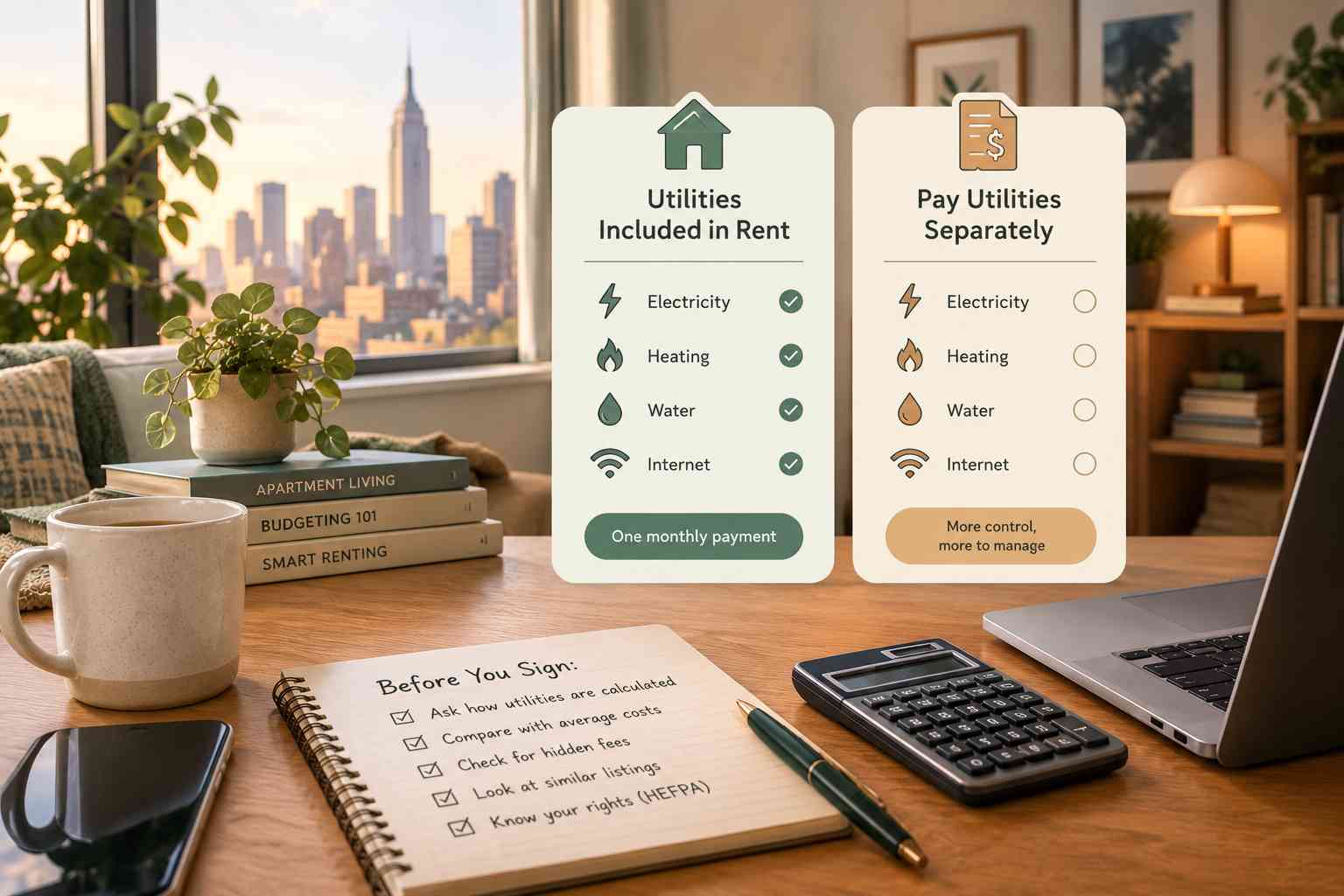
You saw the listing. “Utilities included.” Great, one less bill to think about, or so it seemed until you actually sat down and did the math on what that convenience is costing you.
Are utilities included in rent actually a good deal, or is a landlord just baking a padded number into your monthly payment and calling it a perk? Are utilities included in apartment rent situations even structured the same way from building to building? The honest answer to both: it depends, and most renters never bother checking.
TL;DR
- Are utilities included in rent a good deal depends on how the cost is calculated, not just the phrase on the listing.
- Some landlords fold in a flat, genuine cost. Others use RUBS, a formula-based split that isn’t tied to your actual usage and can pass along inflated charges.
- Compare your bundled rate against a real average utility cost per month for a unit your size before assuming you’re getting a deal.
- Rent with utilities included tends to favor small units and light users, and tends to cost more for larger households or heavy usage.
- Red flags include an unexplained calculation method, vague renewal increases, and non-included comparable units coming out cheaper.
- New York renters have protections under HEFPA covering fair utility billing practices, even when a landlord manages the account.
- If your utilities aren’t actually bundled, you likely have the right to shop your own energy supplier in a deregulated market like New York or Pennsylvania.
What “Utilities Included” Actually Means?
When a listing says utilities included, it usually means one of two things, and the difference matters more than most renters realize.
Sometimes the landlord pays the utility company directly, and the cost genuinely gets folded into your rent as a flat, all-in number. Other times, especially in multi-unit buildings, the landlord uses something called a Ratio Utility Billing System, or RUBS, splitting the building’s total utility cost across tenants based on square footage, occupancy, or a formula that isn’t always transparent. According to a tenant advocacy resource from the National Consumer Law Center, RUBS bills aren’t based on your actual usage at all, they’re calculated from opaque, building-wide formulas that can change at the landlord’s discretion and, in some cases, pass along inflated charges.
That distinction is the whole ballgame. A flat, genuinely-included rate can be a fair deal. A RUBS-based charge dressed up as “included” can quietly cost you more than paying the utility company yourself would.
Doing the Actual Math.
Here’s the real test for whether are utilities included in rent is working in your favor: compare what you’re paying against what an average utilities cost per month actually runs for a comparable unit.
According to the U.S. Energy Information Administration’s monthly electricity data, residential electricity costs have been climbing steadily, and national averages don’t account for your specific unit’s size, insulation, or appliance load. Still, they’re a useful baseline. If your landlord’s “utilities included” premium runs well above what average utility cost per month figures suggest for a unit your size, that’s worth a second look.
A quick way to check: ask what your unit’s rent would be without utilities. If the property doesn’t offer a non-included option, look at comparable listings nearby that don’t include utilities, then estimate your own usage. Most renters skip this step entirely and just trust the number on the listing.
Why Landlords Bundle Utilities in the First Place?
Landlords aren’t doing this purely as a favor. Bundling utilities into rent, or splitting them via RUBS, means the landlord doesn’t deal with unpaid utility bills from individual tenants, doesn’t need to install separate meters, and can build in a margin that isn’t obvious to a renter scanning listings.
That margin isn’t automatically unfair. Managing utility billing takes administrative effort, and some markup for that is reasonable. The problem shows up when the markup is large, undisclosed, or based on a formula, RUBS again, that doesn’t match your actual usage. A studio apartment tenant living alone shouldn’t necessarily pay the same utility allowance as a three-bedroom unit down the hall, but under some RUBS formulas, that’s exactly what happens.
Rent With Utilities Included: When It’s Actually Worth It?
Rent with utilities included tends to make sense in a few specific situations.
If you’re in a small unit with modest usage, a studio, a one-bedroom, someone who’s out of the apartment most of the day, a flat included rate can genuinely work in your favor, especially if you’d otherwise be paying a base utility charge just to keep an account open.
It also simplifies budgeting. No surprise bill during a brutal winter or a heat wave, since the number is locked into your rent regardless of usage swings. For renters who value predictability over optimizing every dollar, that’s a real, legitimate benefit, not just a marketing line.
Where it tends to fall apart: larger units, households with multiple people, or anyone with above-average usage, gaming setups, multiple devices, running AC constantly in summer. In those cases, you’re often subsidizing the building’s average usage rather than paying anything close to your own.
How Much Are Utilities in an Apartment, Really?
How much are utilities per month depends heavily on unit size, location, and season, but a few patterns hold up across most markets.
Electricity tends to be the biggest variable cost, swinging seasonally with heating and cooling. Gas, where applicable, follows a similar pattern, spiking in winter. Water and trash tend to be more stable month to month, which is part of why some buildings only bundle those two and leave electricity separate, it’s the harder cost to predict and price into a flat rate profitably.
How much are utilities for an apartment in your specific case comes down to running your own numbers rather than trusting a generic average, since a unit’s insulation quality and appliance age can shift your actual cost meaningfully compared to a building-wide estimate.
Setting Your Own Utility Allowance Expectations.
If you’re comparing two apartments, one with utilities included and one without, it helps to set a personal utility allowance before you tour either place. Figure out roughly what average utilities cost per month would run for your household size and habits, then treat that number as your comparison baseline rather than trusting whatever premium a landlord has attached to the “included” unit.
This matters most for anyone unsure how much are utilities per month tend to run in a given climate. A renter in a colder region needs a bigger mental utility allowance for winter heating than someone in a mild coastal market, and average utilities cost figures that ignore climate can undersell what a bundled rate is actually worth to you specifically.
Red Flags Worth Watching For!

A few signs your “utilities included” arrangement might not be as good as it sounds:
- The landlord can’t or won’t explain how the utility portion of your rent is calculated
- Your rent jumped significantly at renewal with a vague “utility cost increase” as the only explanation
- You’re on a RUBS-style split and usage seems unrelated to what you actually use
- Comparable non-included units nearby, once you add estimated utility costs, come out cheaper than your bundled rate
If any of these sound familiar, it’s worth reviewing your lease terms and, if something seems off, checking your state’s tenant protections. Renters rights vary by state, but New York renters specifically have protections under the Home Energy Fair Practices Act, which covers fair billing practices even when a landlord is the one managing the utility relationship rather than you directly. Knowing your renters rights before you sign a lease, not after a dispute starts, puts you in a much stronger position if a bundled utility charge ever looks questionable.
Are utilities included in rent worth fighting for if you suspect you’re being overcharged? Usually, yes, at minimum it’s worth asking your landlord for an itemized breakdown before assuming the number is fixed.
What If Utilities Aren’t Actually Included?
If you’ve read this far and realized your utilities aren’t bundled after all, that’s not necessarily bad news. It means you have direct control over your energy costs, including the ability to shop your own supplier in deregulated markets like New York and Pennsylvania.
If you’re a renter trying to figure out whether you can even make that switch, our guides on switching energy suppliers in New York and switching in Pennsylvania walk through exactly what determines whether the choice is yours or your landlord’s. And if you’ve never actually broken down what’s on your monthly statement, our guide to understanding your utility bill is worth a read before you assume you know what you’re paying for.
Before You Sign Anything.
Whether utilities included ends up being a good deal or a quiet markup depends entirely on the numbers behind it, not the phrase itself on a listing. Are utilities included in rent worth paying extra for in your specific case comes down to your unit size, your usage habits, and whether the landlord can actually explain the number. Ask directly how the amount is calculated. Compare it against a real average utilities cost estimate for a unit your size. And if the answer is vague or the landlord seems reluctant to explain it, treat that reluctance as information.
If you do end up with a unit where utilities are on you directly, comparing energy suppliers is worth the ten minutes it takes. Our guide on choosing a licensed energy supplier covers what separates a fair offer from one you should walk away from.
Ready to Compare Your Own Rate?
If your utilities aren’t bundled into rent, or you’re moving somewhere new, the fastest way to know you’re not overpaying is to actually compare your options.
Compare electricity plans now →
FAQs
Are utilities included in rent actually cheaper than paying for them yourself?
Not always. It depends on how the landlord calculates the number. A flat, honest rate can save you money, especially in a small unit. A RUBS-based split can end up costing more than paying the utility company directly, since it’s based on a formula, not your actual usage.
How do I know if my building uses RUBS instead of a flat included rate?
Ask directly. If the landlord can explain a simple flat number, that’s usually a genuine included rate. If they mention square footage, occupancy, or a formula that changes, you’re likely on a Ratio Utility Billing System, and it’s worth understanding exactly how that formula works before signing.
What’s a reasonable average utility cost per month I should expect to pay?
It depends heavily on your unit size, climate, and season, electricity swings the most since it covers heating and cooling. Check the EIA’s published residential rate data as a rough national baseline, then adjust for your specific location and usage habits.
Should I ask for a breakdown of what utilities included actually covers?
Yes, always. Some bundled rates cover electricity, gas, water, and trash. Others cover just one or two. Knowing exactly what’s included, and what’s billed separately, keeps you from assuming a “utilities included” listing covers more than it actually does.
Is rent with utilities included a better deal for a couple or a single renter?
Usually better for a single renter or light user, since bundled rates tend to average out costs across all tenants. A larger household with heavier usage often ends up subsidizing lighter users in the building rather than saving money themselves.
Can my landlord raise the utility portion of my rent without explanation?
It depends on your lease terms and state protections. In New York, HEFPA requires fair billing practices even when a landlord manages the utility relationship. A vague “utility cost increase” with no itemized reason is worth questioning, not just accepting at renewal.
How much are utilities per month if I move to a similar apartment without them included?
Look at comparable non-included listings nearby and estimate your usage from there, since a generic national average won’t account for your specific unit’s insulation, appliance age, or local climate. Comparing a few real listings gives a far more accurate answer than any flat estimate.
Do I have any renters rights if I think I’m being overcharged for utilities?
Yes. Renters rights around utility billing vary by state, but many, including New York’s HEFPA protections, require transparency even when a landlord handles the utility account. Reviewing your lease and asking for an itemized breakdown is a reasonable first step before escalating a complaint.
If utilities aren’t included, can I choose my own energy supplier?
Often, yes, depending on whose name is on the utility account and whether you’re in a deregulated market like New York or Pennsylvania. If the account is in your name, you typically have the right to shop your own electricity supplier.