
With electricity costs continuing to fluctuate U.S. residential electricity prices, many households are looking for flexible ways to manage their energy expenses. One option that’s gained attention is pay as you go electricity, a billing model that allows customers to prepay for electricity and monitor their usage in near real time instead of receiving a traditional monthly bill.
For some consumers, prepaid electricity offers greater control over spending, fewer upfront requirements, and the ability to track energy use more closely. However, it isn’t the best solution for everyone. Depending on your lifestyle, budget, and energy consumption habits, a traditional monthly electricity plan or a plan offered by a licensed Energy Service Company (ESCO) may provide better long-term value and price stability.
Understanding how pay-as-you-go electricity works, its advantages and limitations, and how it compares with other electricity plans can help you make a more informed decision to compare electricity plans. As a licensed Energy Service Company (ESCO), City Power and Gas believes consumers should compare electricity plans based on their household needs, pricing structure, flexibility, and overall value, not simply how payments are made.
TL;DR
- Pay as you go electricity lets you prepay for electricity instead of receiving a monthly bill.
- Smart meters track your electricity usage and deduct costs from your prepaid balance.
- These plans often don’t require credit checks or security deposits, making them attractive for renters and budget-conscious customers.
- While prepaid electricity offers flexibility, it may not always provide the lowest long-term electricity costs.
- Before enrolling, compare all available electricity plans including options from licensed ESCOs to find the plan that best fits your energy usage and financial goals.
What Is Pay As You Go Electricity?

How Prepaid Electricity Works
Pay as you go electricity, also known as prepaid electricity, is an electricity billing option where you pay for energy before you use it rather than receiving a bill at the end of the month. Instead of waiting for a monthly invoice, you add funds to your electricity account, and your available balance decreases as your home consumes electricity.
The amount deducted depends on your actual electricity usage, how electricity consumption is measured in kilowatt-hours (kWh) . Once your prepaid balance runs low, you’ll typically receive alerts by text, email, or through a mobile app, giving you time to add more funds before your balance reaches zero.
Unlike many traditional electricity plans, pay as you go electricity plans often don’t require a credit check or a large security deposit. This makes them a practical option for renters, customers with limited credit history, or anyone looking for greater flexibility in managing household energy expenses.
How Smart Meters Support Pay As You Go Electricity
A smart meter is the technology that makes pay-as-you-go electricity possible. Unlike traditional meters that are read periodically, smart meters automatically record electricity usage and securely send that information to your electricity provider.
Because usage data is updated regularly, customers can view their energy consumption in near real time, monitor their remaining account balance, and better understand how everyday activities affect electricity costs. This visibility allows households to adjust their energy habits to reduce your electricity bill before costs increase, making it easier to stay within a monthly budget while avoiding unexpected service interruptions.
Pay As You Go Electricity vs. Traditional & ESCO Electricity Plans
Choosing the right electricity plan isn’t just about how you pay, it’s about finding an option that matches your energy usage, budget, and long-term financial goals. While pay-as-you-go electricity offers flexibility, traditional monthly billing and electricity plans offered by licensed Energy Service Companies (ESCOs) each provide distinct advantages depending on your needs.
| Feature | Pay As You Go Electricity | Traditional Utility Billing | ESCO Electricity Plans |
|---|---|---|---|
| Payment Method | Prepay before using electricity | Monthly bill after usage | Usually monthly billing with various plan options |
| Credit Check | Often not required | May be required | Depends on the supplier and plan |
| Security Deposit | Usually not required | May apply | Varies by provider |
| Rate Options | Often variable | Utility default supply rate | Fixed-rate, variable-rate, renewable, and flexible plans |
| Usage Monitoring | Real-time through smart meters | Monthly bill summaries | Varies by provider and available account tools |
| Best For | Budget-conscious customers seeking payment flexibility | Customers who prefer traditional billing | Customers looking for competitive pricing, plan choices, or renewable energy options |
One common misconception is that pay-as-you-go electricity is automatically the cheapest option. While it can help customers control spending by monitoring their electricity usage more closely, the overall cost depends on the electricity rate, household energy consumption, and the specific plan offered by the provider.
For homeowners and renters in states with competitive electricity markets New York Energy Choice, it’s also worth exploring plans from licensed Energy Service Companies (ESCOs). Unlike utilities, which are responsible for delivering electricity and maintaining the power grid, ESCOs compete to supply electricity and may offer fixed-rate plans, renewable electricity options, or flexible pricing designed to meet different customer needs.
As a licensed Energy Service Company (ESCO), City Power and Gas encourages consumer protection and consumers to compare more than just payment methods. Looking at electricity rates, contract terms, renewable energy options, customer support, and your expected energy usage can help you choose a plan that delivers better long-term value, not simply greater payment flexibility.
Ultimately, the best electricity plan is the one that aligns with how you use energy. A customer who values predictable monthly costs may benefit from a fixed-rate ESCO plan, while someone who prefers paying in smaller amounts throughout the month may find pay-as-you-go electricity to be a better fit.
Pros and Cons of Pay As You Go Electricity
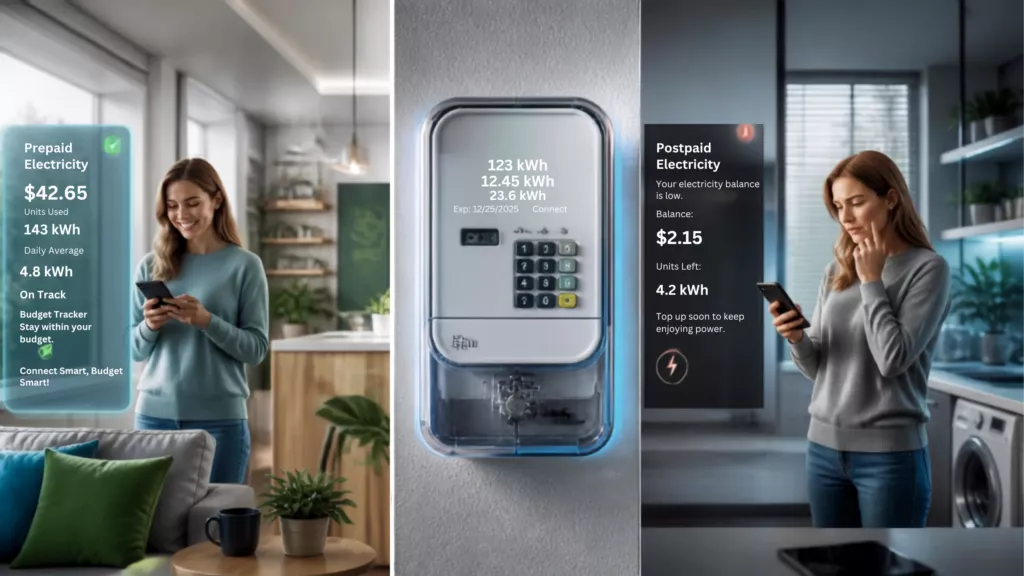
Before choosing a pay as you go electricity plan, it’s important to understand both its advantages and its limitations. While prepaid electricity gives many households greater flexibility and spending control, it may not always be the most cost-effective option for every situation.
Benefits of Pay As You Go Electricity
For the right customer, prepaid electricity offers several practical advantages:
- Greater control over energy spending: Since your account balance updates regularly, it’s easier to see how your electricity usage affects your available funds and adjust your habits before costs increase.
- No credit check or large security deposit: Many pay-as-you-go electricity plans don’t require a credit check or upfront deposit, making them a popular choice for renters, students, and customers rebuilding their credit history.
- Real-time energy monitoring: Smart meters provide ongoing insights into electricity consumption, helping you identify high-usage appliances and make more energy-efficient decisions.
- Flexible payments: Instead of waiting for a monthly bill, you can add funds when it works best for your budget, making it easier to spread electricity expenses throughout the month.
Things to Consider Before Choosing a Prepaid Plan
While pay-as-you-go electricity offers flexibility, there are a few factors to evaluate before enrolling:
- Electricity rates may vary: Some prepaid electricity plans use variable pricing and electricity market pricing, so compare the cost per kilowatt-hour with other electricity plans instead of assuming prepaid service is the lowest-cost option.
- Regular account monitoring is required: Because electricity is paid for in advance, you’ll need to keep track of your account balance and add funds before it runs low. Most providers offer text or email alerts, but staying proactive helps prevent service interruptions.
- It isn’t the best fit for every household: Families with predictable electricity usage or homeowners looking for long-term price stability may benefit more from a fixed-rate electricity plan offered by a licensed Energy Service Company (ESCO).
The best electricity plan depends on your household’s energy habits, financial goals, and preferred payment style. Rather than focusing only on prepaid billing, compare electricity rates, contract options, renewable energy choices, and overall plan value. As a licensed Energy Service Company (ESCO), City Power and Gas encourages consumers to evaluate all available electricity supply options so they can choose a plan that fits both their lifestyle and long-term energy needs.
Who Should Choose a Pay As You Go Electricity Plan?
Pay-as-you-go electricity isn’t designed for every household, but it can be an excellent option for customers who value flexibility and want greater control over when and how they pay for electricity. Understanding your lifestyle, budget, and energy usage patterns can help determine whether a prepaid electricity plan is the right fit.
A Pay As You Go Plan May Be a Good Choice If You:
- Prefer to manage your electricity budget closely. Paying in advance and monitoring your balance throughout the month can make it easier to control spending and avoid unexpected monthly bills.
- want to avoid a credit check or large upfront deposit. Many prepaid electricity plans have fewer enrollment requirements, making them a practical option for customers with limited credit history or those looking for a faster setup process.
- Rent your home or move frequently. Flexible payment structures can be appealing if you don’t want to commit to a long-term electricity contract.
- Like monitoring your energy usage in real time. Smart meters and account alerts provide ongoing visibility into electricity consumption, allowing you to adjust your habits before costs increase.
You May Want to Consider Other Electricity Plans If You:
A pay-as-you-go plan isn’t always the most cost-effective solution. You may benefit from exploring other electricity options if you:
- Prefer predictable monthly electricity costs with fewer fluctuations.
- Want the stability of a fixed-rate electricity plan.
- Are interested in renewable electricity options or other plan features that may not be available with every prepaid provider.
- Have consistent household energy usage and prefer traditional monthly billing.
In competitive electricity markets, comparing plans from licensed Energy Service Companies (ESCOs) can provide additional flexibility beyond prepaid electricity. Many ESCOs offer fixed-rate, variable-rate, and renewable electricity plans, allowing customers to choose an option that aligns with their budget and long-term energy goals.
Rather than assuming one type of electricity plan is best for everyone, compare pricing, contract terms, payment options, and customer benefits before enrolling. Taking the time to evaluate your choices can help you find an electricity plan that delivers both convenience and long-term value.
Conclusion
Pay as you go electricity provides an alternative to traditional monthly billing by giving customers more flexibility and visibility into their energy usage. For households that prefer making smaller payments, avoiding credit checks, or actively managing electricity consumption, it can be a practical solution.
However, no single electricity plan is right for everyone. Before making a decision, compare electricity rates, payment structures, contract terms, and the overall value each plan offers. Looking beyond payment flexibility can help you find an option that supports both your budget and your long-term energy goals and home energy efficiency.
As a licensed Energy Service Company (ESCO), City Power and Gas believes informed customers make better energy decisions. Whether you’re exploring pay-as-you-go electricity or comparing other electricity supply options, understanding how different plans work is the first step toward choosing the solution that’s right for your home.
FAQs
What is pay-as-you-go electricity?
Pay-as-you-go electricity is a prepaid billing option that lets customers pay for electricity before using it. Instead of receiving a monthly bill, funds are added to an account, and electricity costs are deducted based on actual energy usage recorded by a smart meter. Many plans also provide balance alerts to help customers manage their electricity spending.
Do pay-as-you-go electricity plans require a credit check?
Many pay-as-you-go electricity plans do not require a credit check or a large security deposit, making them an attractive option for renters, customers with limited credit history, or anyone looking for a simpler enrollment process. However, requirements can vary depending on the electricity provider and the specific plan.
Is pay-as-you-go electricity cheaper than a traditional electricity plan?
Not necessarily. While prepaid electricity can help customers manage their budget and monitor energy usage more closely, the overall cost depends on the electricity rate, your household’s energy consumption, and the plan’s pricing structure. Comparing multiple electricity plans is the best way to determine which option offers the greatest value.
Can I switch from a pay-as-you-go electricity plan to another electricity supplier?
In many deregulated electricity markets, customers can switch to another electricity supplier or ESCO if a different plan better suits their needs. Before making a change, review any contract terms, pricing details, or eligibility requirements that may apply to your current electricity plan.
Do smart meters work with pay-as-you-go electricity?
Yes. Smart meters are a key part of most pay-as-you-go electricity plans. They automatically measure electricity usage, update your account balance, and provide near real-time consumption data. This allows customers to monitor energy use, receive low-balance alerts, and make informed decisions about their electricity consumption.
How can I choose the best electricity plan for my home?
The best electricity plan depends on your budget, energy usage, and personal preferences. Compare electricity rates, contract terms, renewable energy options, payment flexibility, and customer support before enrolling. As a licensed Energy Service Company (ESCO), City Power & Gas encourages consumers to compare available electricity plans carefully so they can choose the option that delivers the best long-term value.